


















Chemical Resistant Coatings
AST provides chemical resistant coating services for industrial process equipment exposed to aggressive acids, bases, oxidisers and reactive process media. We apply Halar (ECTFE), PFA and PTFE barrier systems depending on the specific chemistry, operating temperature and film build required.
As a licensed applicator for both Chemours and Syensqo (formerly Solvay) fluoropolymers, AST can match the right coating to the specific chemistry — not push a single product. Selection is driven by manufacturer compatibility data and operating conditions.
Chemical service is concentration, temperature and time dependent — and no single fluoropolymer is the right answer for every duty. AST's approach is to match the specific chemistry to the coating that has the best published manufacturer performance for that service, at the film build and operating temperature the application requires.
Halar ECTFE Chemical Barrier Coatings
Halar (ECTFE) is the workhorse chemical-resistant barrier coating for aggressive process equipment. Manufactured by Syensqo/Syensqo, Halar offers the best permeation resistance of any fluoropolymer (10–100× better than PTFE), full pH 1–14 resistance and the best fluoropolymer performance in sodium hypochlorite service. Thick-film barrier linings up to 2,000 µm at 150 °C continuous.
- Best fluoropolymer for sodium hypochlorite (bleach)
- 10–100× permeation resistance vs PTFE
- Full pH 1–14 resistance
- Thick-film barrier linings to 2,000 µm
PFA Chemical Resistant Coatings
PFA is the premium Chemours fluoropolymer for chemical service. Nonporous melt-flow film, full PTFE-level chemical inertness, and the highest continuous operating temperature of any chemical-resistant coating (260 °C). PFA is the right choice when the service combines high temperature, aggressive chemistry and permeation barrier requirements — particularly for pumps, valves, tanks and vessels in the chemical processing industry.
- 260 °C continuous operating temperature
- Nonporous melt-flow film
- Near-universal chemical inertness
- FDA compliant premium grades
PTFE Chemical Resistant Coatings
PTFE delivers the same near-universal chemical resistance envelope as PFA at a lower cost, and at the same 260 °C continuous temperature ceiling. It is the default choice for general chemical service where permeation and thick-film lining are not critical. PTFE is widely used on rollers, guides, process hardware and fabricated assemblies requiring broad chemical resistance and reliable release performance.
- 260 °C continuous operating temperature
- Broad chemical resistance
- Most economical fluoropolymer
- FDA compliant food grades available
Why Choose AST for Chemical Resistant Coating?
AST is the only licensed industrial fluoropolymer applicator in Australia, New Zealand and South East Asia and is authorised to apply both Chemours fluoropolymers and Syensqo Halar. All coating systems are backed by manufacturer technical support, Chemours Global quality audits and a lifetime workmanship warranty. Customers include VISY, Pfizer, Alcoa, Rio Tinto and Lockheed Martin.
- Only licensed industrial fluoropolymer applicator in AU, NZ & SEA
- Applies both Chemours (PTFE/PFA/FEP/ETFE) and Syensqo Halar (ECTFE)
- Lifetime warranty on workmanship
- Direct Chemours technical support for unusual media
AST applies both Chemours and Syensqo fluoropolymer systems. As the only licensed industrial fluoropolymer applicator in Australia, New Zealand and South East Asia we have direct manufacturer technical support for unusual chemical media and non-standard service conditions.
Chemical Service Selection Guide
Quick reference for matching the right fluoropolymer coating to the application.
| Service Need | AST Recommendation | Why |
|---|---|---|
| Sodium hypochlorite (bleach) service | Halar ECTFE | Best fluoropolymer for NaOCl, 150 °C rated |
| Hot concentrated nitric acid | PTFE or PFA | ETFE and Halar not recommended for sustained hot HNO₃ |
| Permeation barrier lining | Halar ECTFE or PFA | 10–100× better permeation than PTFE |
| High temp > 200 °C chemical service | PTFE or PFA | 260 °C continuous — highest of the fluoropolymers |
| Aggressive acid + alkali mixed service | Halar ECTFE | Full pH 1–14 resistance |
| Methylene chloride / chloroform | PTFE or PFA | Halar is not resistant to these solvents |
| Thick lining > 500 µm for severe duty | Halar or ETFE | Thick-film builds to 2,000 µm |
| FDA chemical + food contact | PFA | Premium nonporous film, broad chemical resistance |
Related Resources
Brand Page
Halar Coating Services
Syensqo Halar ECTFE barrier coating services.
Brand Page
Teflon Coating Services
Chemours Teflon PTFE and PFA coating services.
Reference
Chemical Compatibility Guide
Chemical resistance chart across 30+ chemicals.
Industry
Chemical & Scientific
Coating services for chemical process industries.
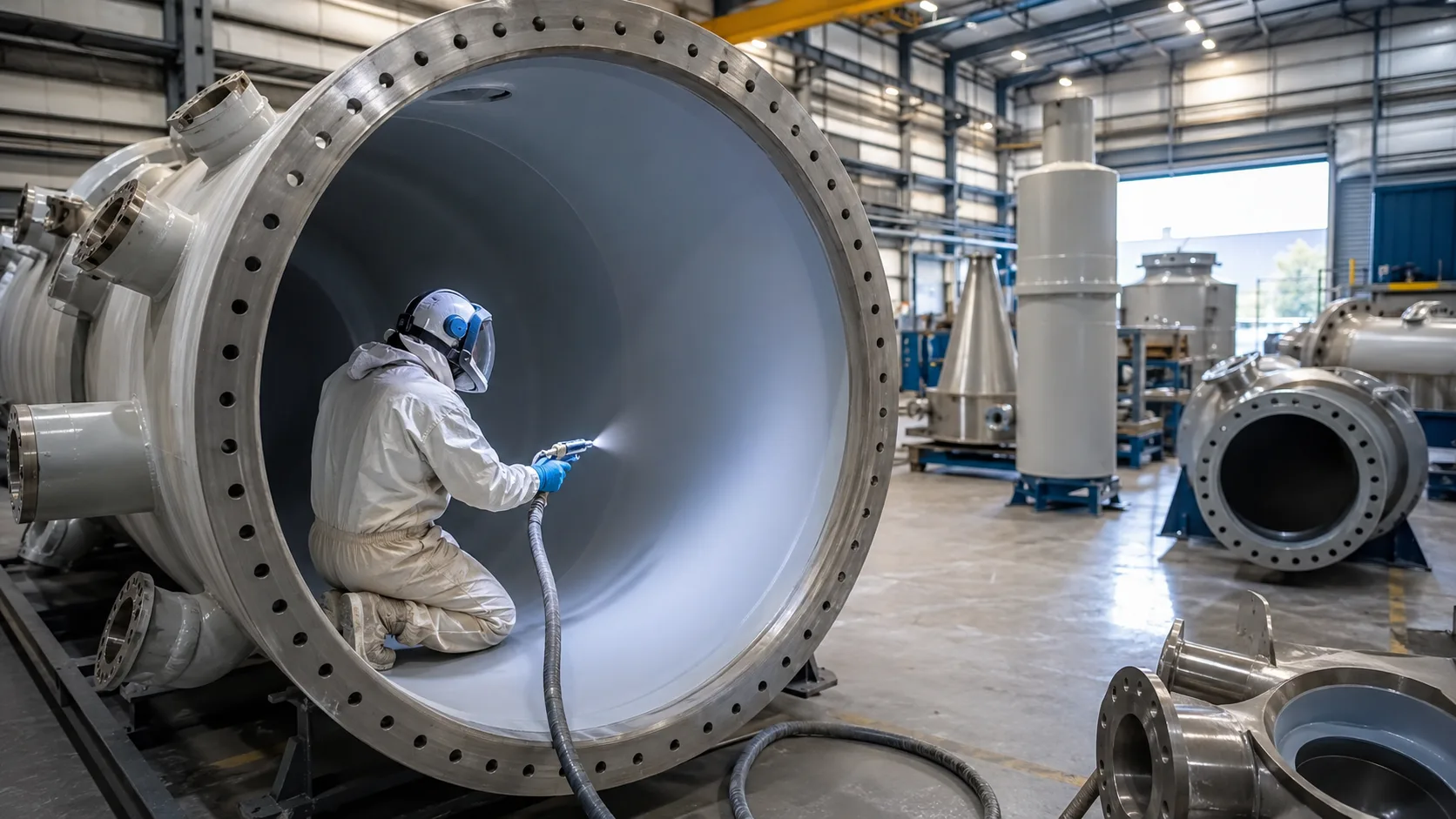
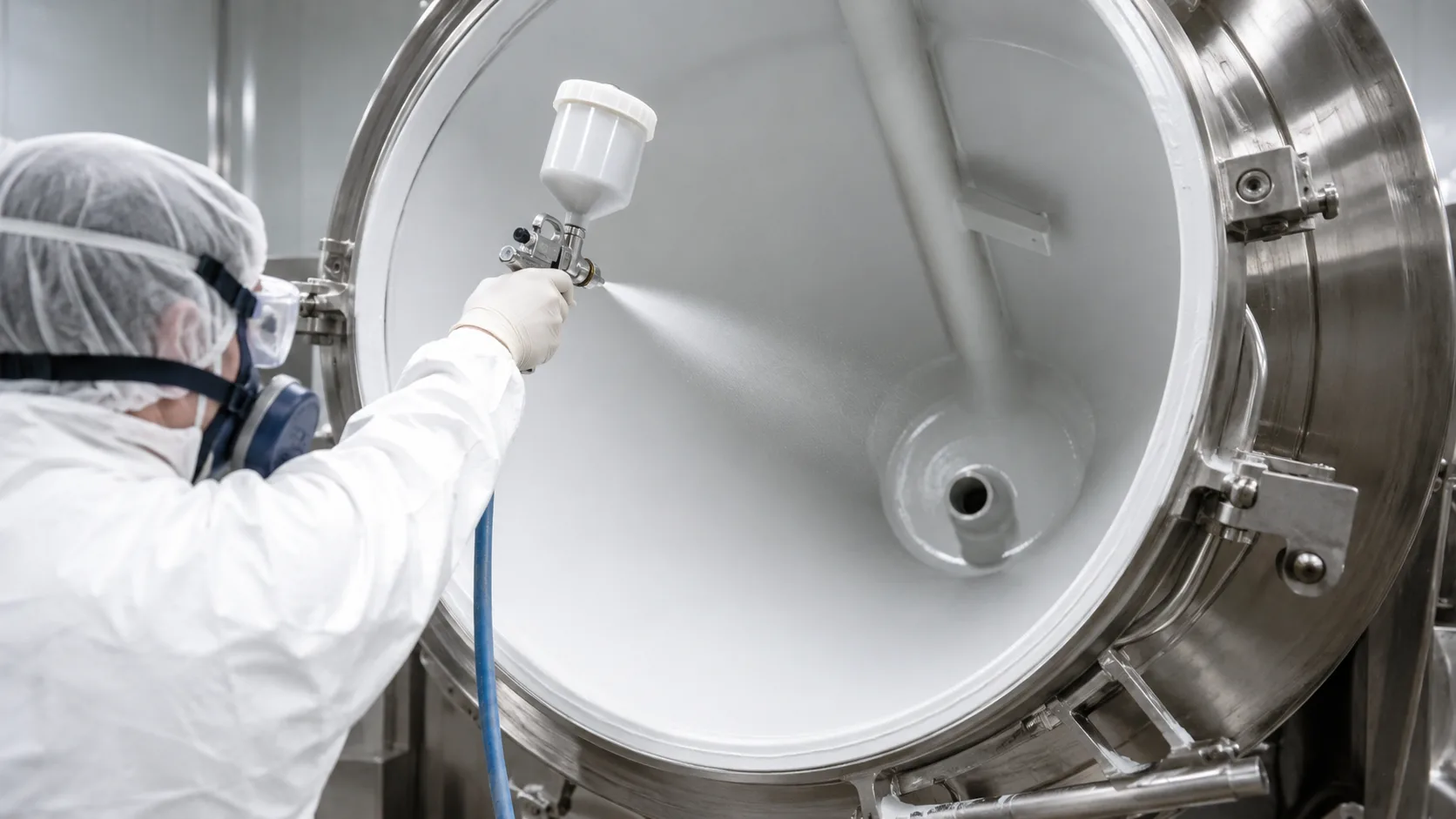
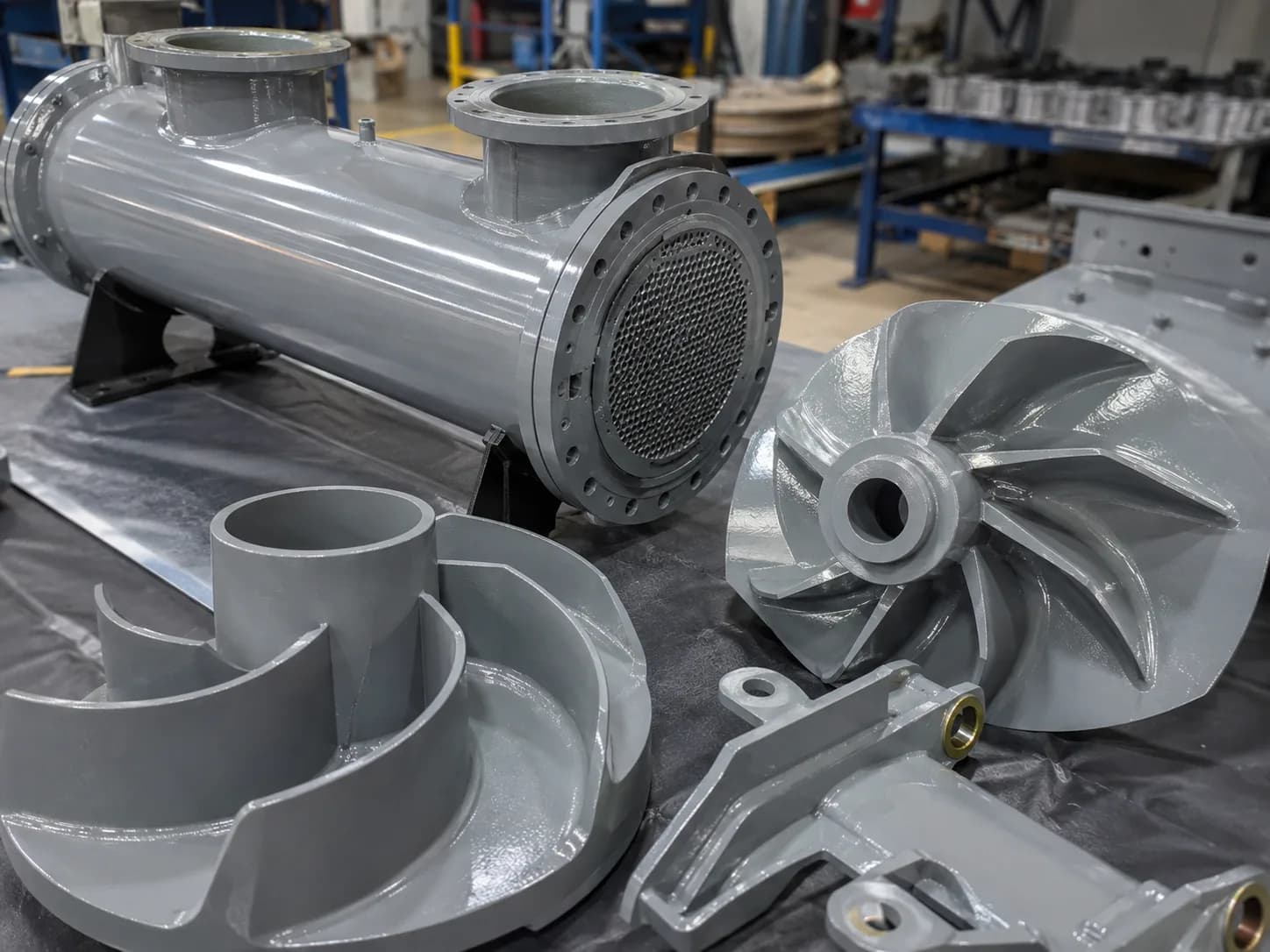
Where chemical-resistant coatings live
Halar (ECTFE), Tefzel (ETFE), PFA and PTFE barrier systems applied across vessel interiors, reactor linings, pump internals, heat exchangers and process spools — holiday/spark-tested before release.
Frequently Asked Questions
What is a chemical resistant coating?
Which coating has the best chemical resistance?
When should I use Halar ECTFE instead of PTFE or PFA?
Can chemical resistant coatings be applied to existing equipment?
What are the temperature limits for chemical resistant coatings?
How do I know if a coating will resist my chemical?
Only licensed industrial fluoropolymer applicator in Australia, New Zealand and South East Asia
Yearly technical and quality audits by Chemours Global
Lifetime warranty on workmanship
Need a chemical resistant coating for your process equipment?
Send AST your chemical, concentration, temperature and exposure conditions. Our team will cross-check against manufacturer data and recommend the right Halar, PFA or PTFE system for your application.