



















PFA Coating Services
PFA (perfluoroalkoxy) is the step-up system within the Chemours Teflon family. It gives the same release performance customers expect from PTFE, but as a nonporous melt-flow film built much thicker — turning a release coating into a genuine chemical and permeation barrier.
AST applies PFA across Australia and New Zealand for food processing, chemical process and bakeware duty — rated to 260 °C continuous service, FDA compliant for direct food contact, and backed by a lifetime workmanship warranty.
Short answer: PFA is a melt-processable member of the Chemours Teflon family. Because it flows during cure, it forms a nonporous film and can be built to around 500 µm — far thicker than a PTFE system. It is rated to 260 °C continuous service and is FDA compliant for direct food contact when applied and cured correctly. Specify PFA when the job needs a thicker barrier, higher abrasion resistance or real chemical duty; specify PTFE when the job is release and low friction.
What PFA is
PFA sits alongside PTFE and FEP under the Chemours Teflon brand, but behaves differently in the oven. PTFE sinters — the particles coalesce without truly flowing. PFA melts and flows, so the cured film closes up into a continuous, nonporous surface rather than a consolidated one. That is the whole basis of its barrier performance: there is no porosity for a process chemical to work its way through.
The second consequence is build. PTFE non-stick systems typically run 25–75 µm, up to 205 µm on high-build primer and topcoat combinations. PFA can be applied up to around 500 µm. That extra thickness carries mechanical wear, resists permeation, and gives the coating something to lose before the substrate is exposed — which is why PFA is specified on parts that are scraped, cleaned aggressively or run in chemically active product streams.
When to specify PFA over PTFE
The selection logic is straightforward: PTFE thin-film for non-stick and low-friction duty, PFA when a thicker barrier, higher abrasion resistance or chemical service is needed. Where the duty is aggressive chemical immersion rather than release, the answer moves out of the Teflon family altogether.
| Duty | System | Why |
|---|---|---|
| Straightforward release / non-stick | PTFE | Lowest coefficient of friction, thin film, most economical per coat |
| Release plus chemical exposure | PFA | Nonporous melt-flow film resists permeation to the substrate |
| Release plus abrasion or scraping | PFA | Thicker build carries mechanical wear that a thin film would not |
| High-temperature service to 260 °C | PTFE or PFA | Both rated 260 °C continuous — build and duty decide between them |
| Aggressive chemical immersion below 150 °C | Halar (ECTFE) | Thick-film barrier lining, holiday tested as standard |
For the full side-by-side across the fluoropolymer families, see PTFE vs PFA vs ETFE vs ECTFE, or read the focused comparison in PTFE vs PFA coating. The umbrella service range sits on our Teflon coating services page.
PFA applications
Food processing contact parts
- Hoppers and chutes
- Mixing shafts and agitators
- Cutters and dividers
- Transfer and conveying surfaces
Chemical process hardware
- Valves, spools and fittings
- Pump and impeller components
- Fabricated process assemblies
- Vessel internals needing release plus barrier
Bakeware systems
- Bread pans and pan sets
- Bun, muffin and flat trays
- Baking moulds and formers
- High-cycle production tooling
Food processing is where PFA earns its keep most often — contact parts that need release and a barrier, and that get cleaned hard between runs. See food processing for how that work is specified and scheduled.
Process and QA
- 1Receive and inspect — substrate condition and geometry confirmed against the specification
- 2Degrease and mask — surfaces that must stay uncoated are masked before preparation
- 3Thermal burn-off and silica / glass bead blast to the anchor profile the system requires
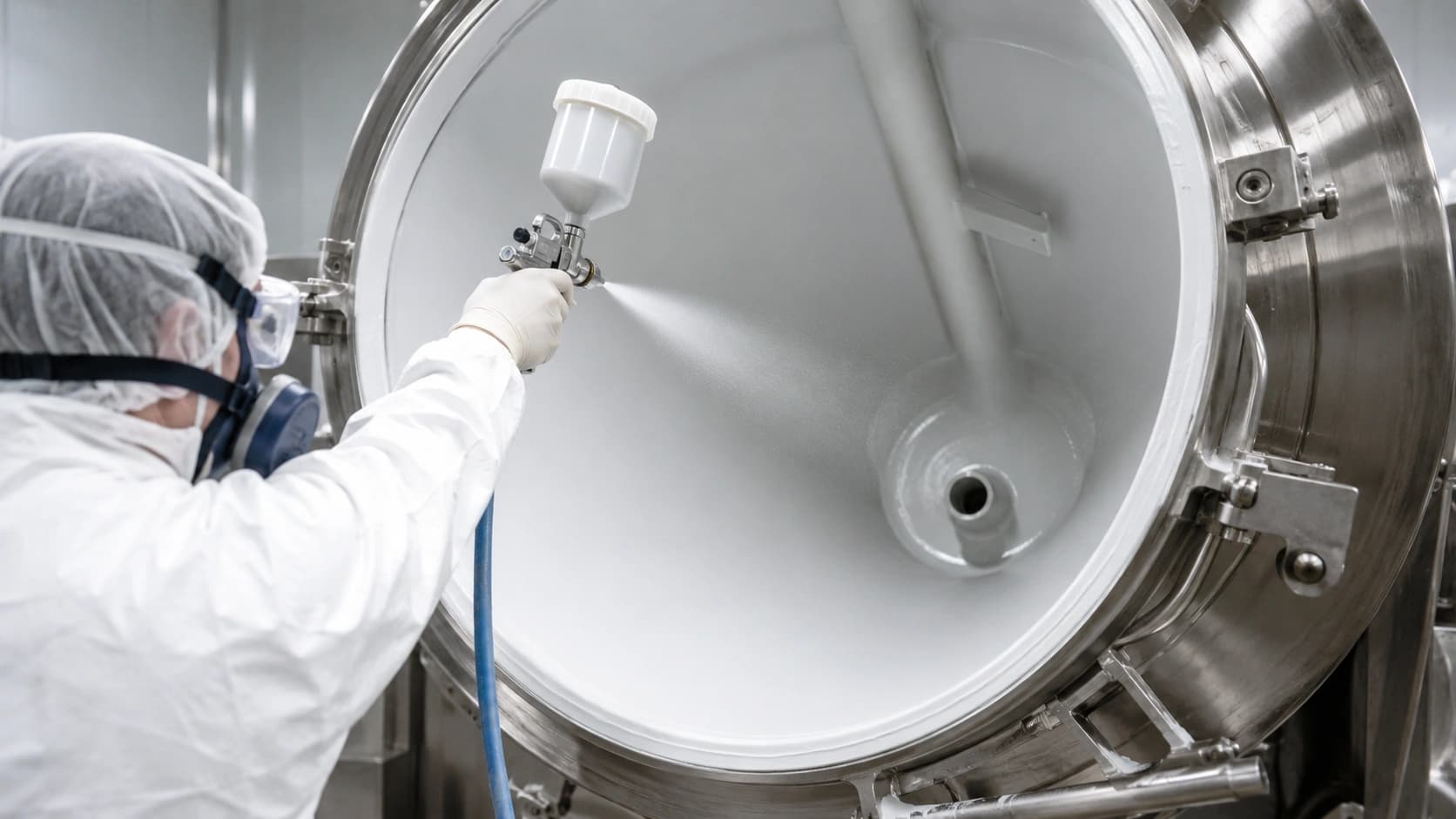
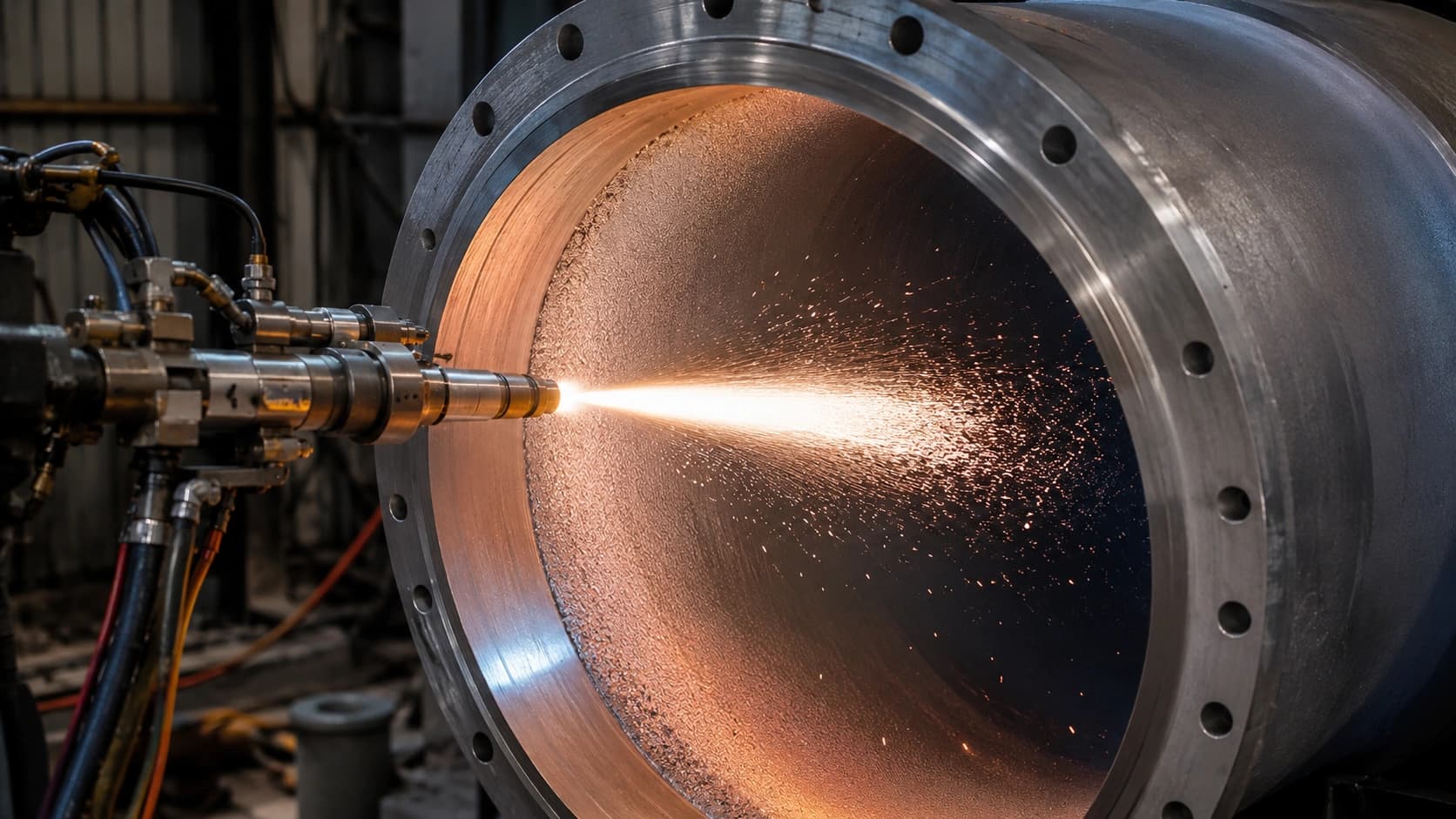
- 4Apply primer, then build the PFA topcoat by spray to the target film build
- 5Cure to the PFA schedule so the film flows out to a nonporous surface
- 6QA — film build checked and documented; materials Certificate of Conformance available on request
Coating turnaround is typically 7–10 working days from receipt of parts at our Campbellfield, Melbourne facility, with freight coordinated across Australia and New Zealand.
AST is the only licensed industrial fluoropolymer applicator in Australia, New Zealand and South East Asia, with technical and quality audits by Chemours Global. Food-contact compliance depends on the system being applied and cured correctly — that is precisely what the licence and the audits cover. We also provide a lifetime warranty on workmanship.
Where the thicker Teflon film goes
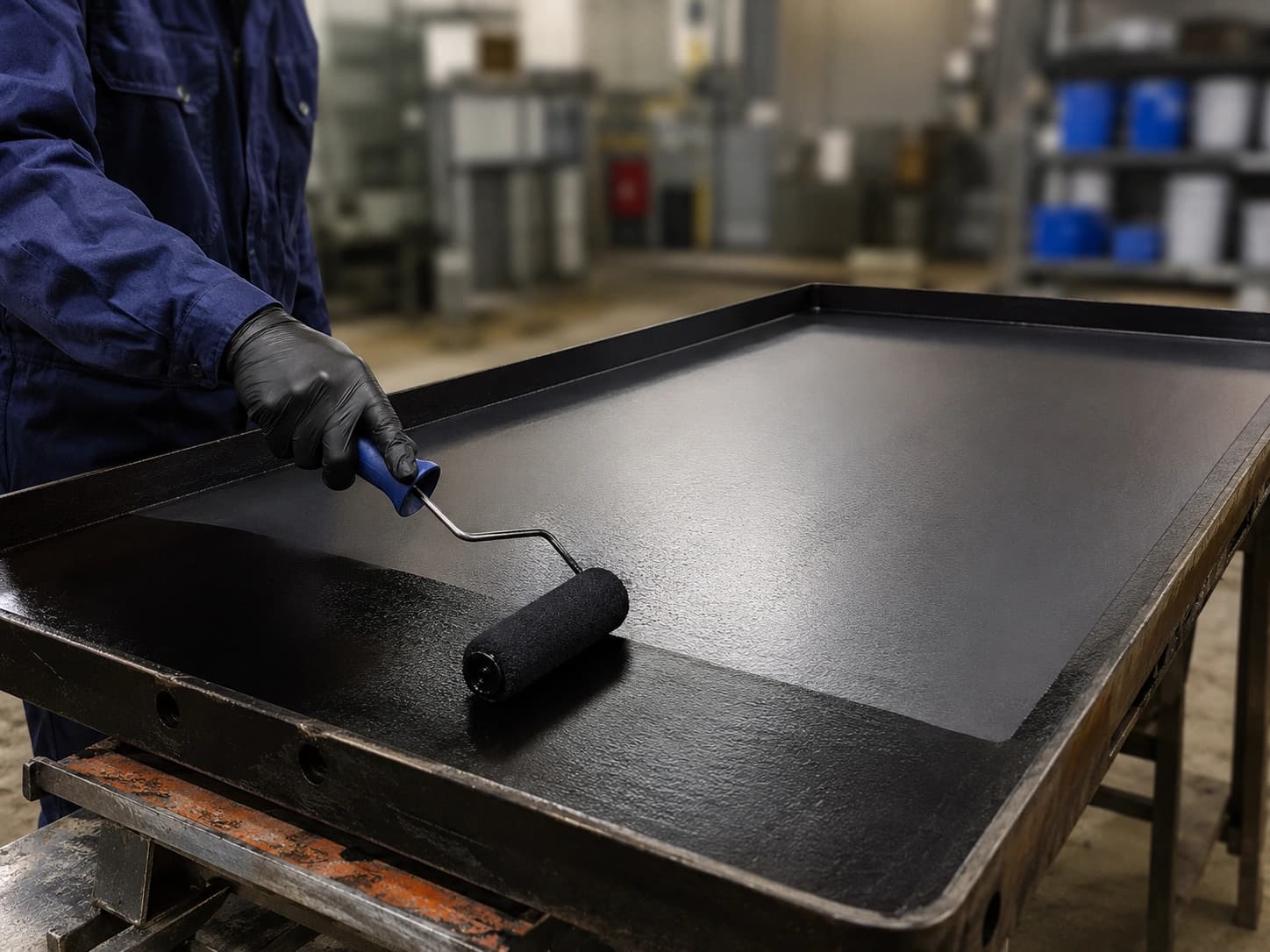
PFA is specified on food contact hardware, process hoppers, rollers and bakeware systems — parts that need release plus a barrier, and that are cleaned hard between production runs.
Frequently Asked Questions
What is the difference between PFA and PTFE?
Is PFA food safe?
What temperature does PFA handle?
When should I specify PFA instead of PTFE?
Only licensed industrial fluoropolymer applicator in Australia, New Zealand and South East Asia
Yearly technical and quality audits by Chemours Global
Lifetime warranty on workmanship
Need PFA specified for a barrier or food-contact duty?
Send us the part, operating temperature, chemical exposure and cleaning regime. Our team will confirm whether PFA is the right system and prepare a technical quotation.