



















Halar & Tefzel Lining for Valves, Thermowells & Agitators
AST lines valve bodies, thermowells, agitators and spools with Halar (ECTFE) and Tefzel (ETFE). We build the lining in several coats to 800–1000 µm, Syensqo's recommended build for full chemical protection, and spark test every part, free of charge.
Serving all of Australia and New Zealand, with a lifetime workmanship warranty and a typical turnaround of 7–10 working days from receipt of parts.
Short answer: For valves, thermowells and agitators in acid or chloride service, AST's usual lining is Halar, built to Syensqo's recommended 800–1000 µm. Tefzel is the alternative. Both are rated to 150 °C continuous. Every Halar and Tefzel part is spark tested before it leaves, free of charge. Neither is used for food contact; for food duty, or above 150 °C, we use PFA.
Why line valves, thermowells and agitators
Corrosion
Acids and chlorides attack bare carbon steel and even stainless. A lining keeps the process fluid off the metal.
Permeation
A thin film lets chemicals creep through over time. A thick, multi-coat lining slows this down.
Chemical attack
Halar and Tefzel resist a wide range of process chemicals, and the lined part is cheaper than an exotic alloy.
Reline, not replace
A worn lining can be stripped and renewed, so the valve body or shaft goes back into service.
Halar vs Tefzel vs PFA for lined parts
All three are fluoropolymers. The right one depends on the chemical, the temperature and whether the part touches food.
| Halar (ECTFE) | Tefzel (ETFE) | PFA | |
|---|---|---|---|
| Maker | Syensqo | Chemours (Teflon™ family) | Chemours (Teflon™ family) |
| Lining build | 800–1000 µm recommended (Syensqo), up to 2000 µm, in several coats | Up to 2000 µm in several coats, geometry dependent | Standard builds are thinner; thick builds to about 1 mm |
| Max continuous service | 150 °C | About 150 °C | 260 °C |
| Cure temperature | 260–290 °C | About 305 °C | 380–390 °C |
| Spark tested | Every part, free of charge | Every part, free of charge | Not spark tested; checked by inspection and film thickness |
| Food contact | No | No | Yes (standard PFA system) |
| Best fit | Valves, thermowells, agitators; hydrochloric acid and chlorine | Alternative to Halar on the same parts | Hotter duty, food contact, abrasion |
Supplier data on Halar and Tefzel differs by chemical, so we choose on your exact chemical, strength and temperature. Halar is also easier to apply on parts with mixed thick and thin sections. Compare all four systems in our PTFE vs PFA vs ETFE vs ECTFE guide or check a chemical in the chemical compatibility guide.
Parts we line
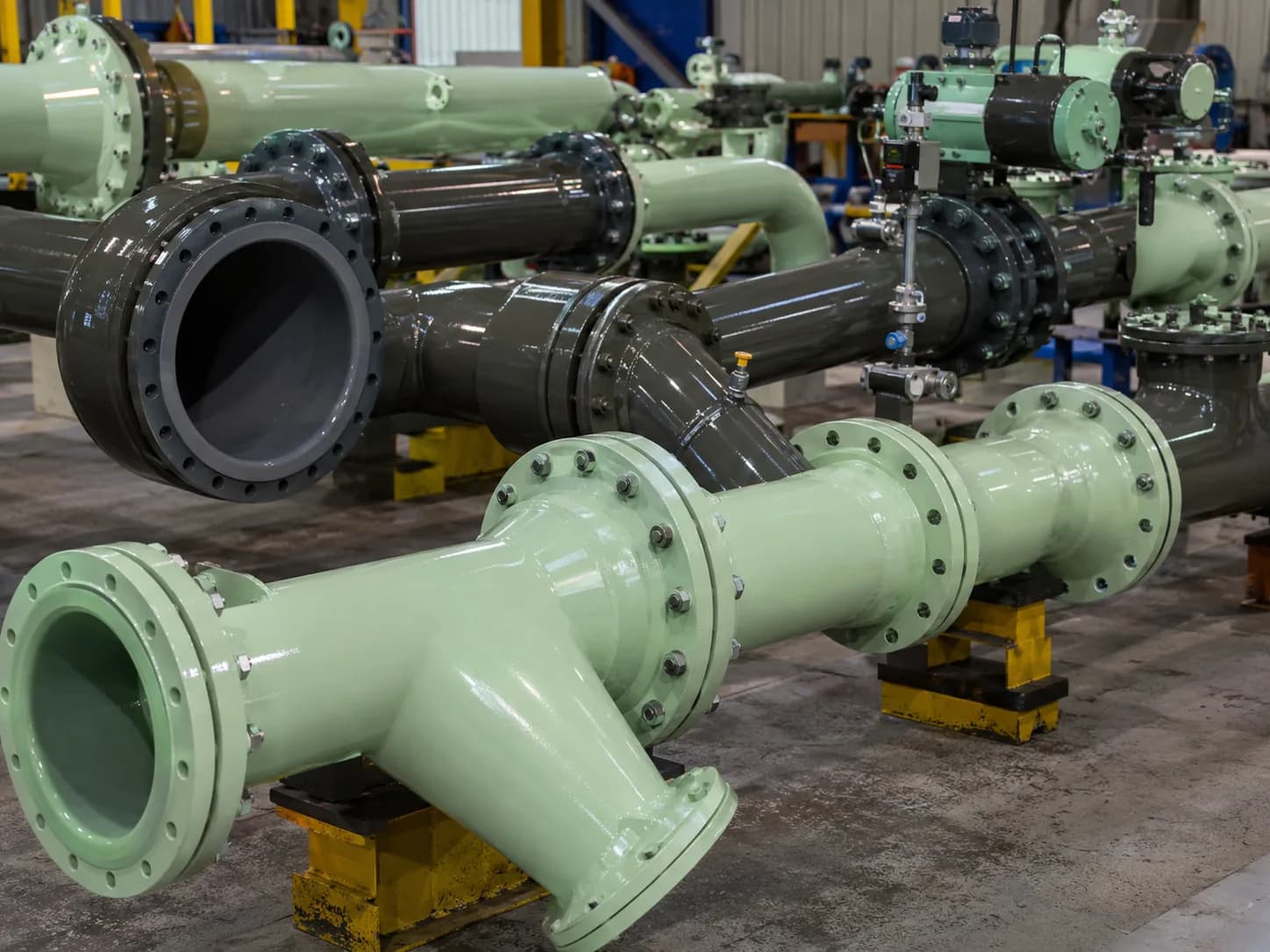
Diaphragm valve bodies
Lined inside only or all over. Our most frequent lined part, with repeat orders every month or two.
Thermowells
Straight and flanged thermowells for temperature probes in corrosive process lines.
Agitators and impellers
Agitator shafts and blades, impellers and static mixers for tanks and reactors.
Spools, tees and fittings
Pipe spools, tees, sparge tubes and strainers, lined inside and on the flange faces.
Fan impellers and housings
Fans and housings handling wet acid gas, built to suit the duty.
Vessel parts
Dished ends and smaller process vessel parts that fit our ovens.
Since October 2023 we have lined 60 valve and thermowell jobs for seven customers. Our ovens take parts up to 7 m × 3 m × 3 m, and up to 8 m loaded diagonally.
How AST lines valves and thermowells
- 1
Inspect and mask
We check the part against your drawing and mask any faces, threads or bores that must stay bare.
- 2
Burn off and blast
Old coatings and contamination are burnt off, then the part is blasted to clean, rough metal for adhesion.
- 3
Prime
A primer goes on first. On Halar the primer is 75–150 µm.
- 4
Build the lining
We apply and cure coat after coat until the lining reaches the specified build. Halar topcoats go on at 150–250 µm each.
- 5
Spark test every part
Each Halar and Tefzel part is tested with a fixed-voltage high-voltage tester, for example 6 kV on a 400–500 µm lining. Free of charge.
- 6
Measure, record and pack
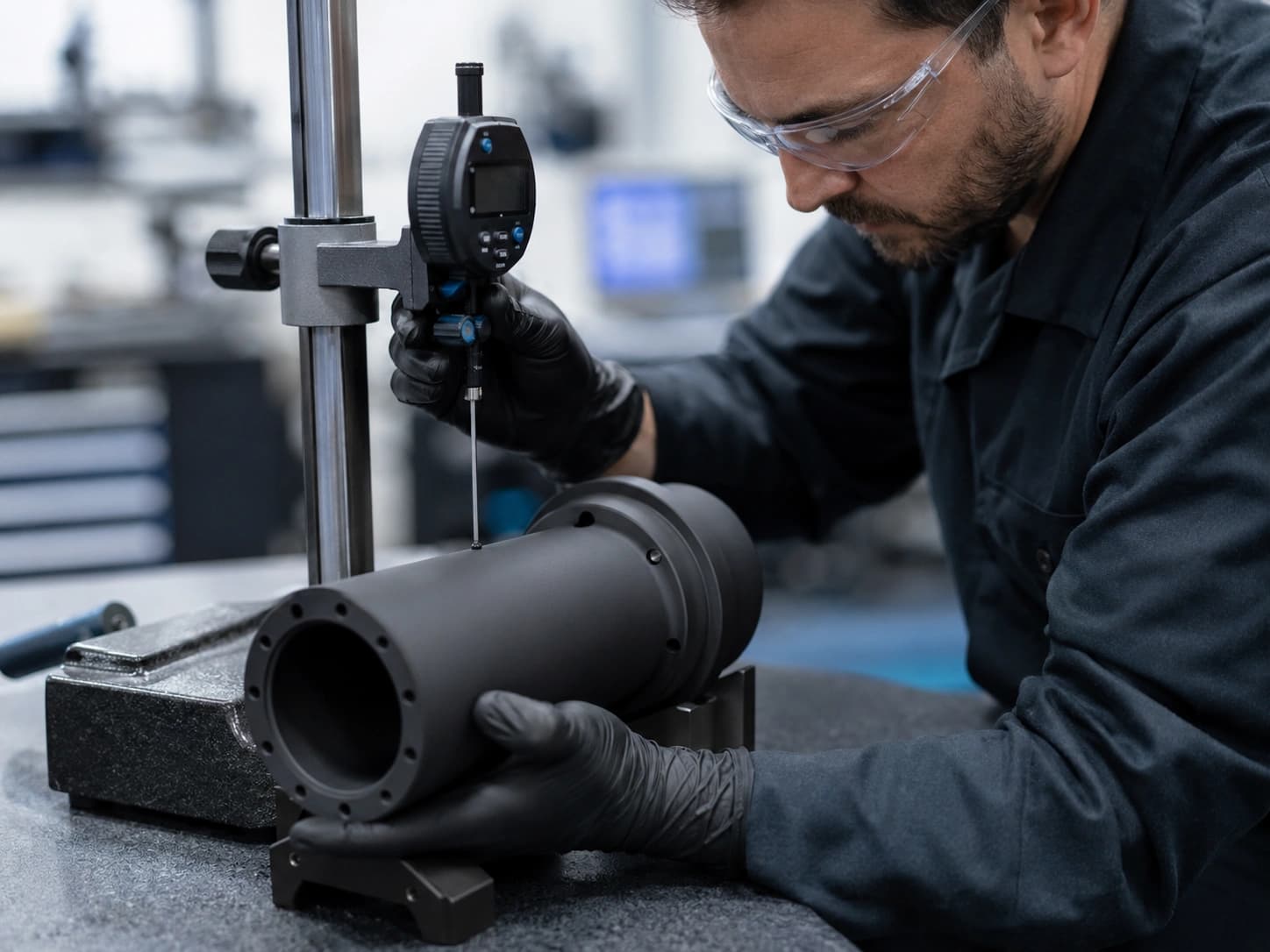
We measure the final film thickness, record the spark test result as pass or fail, then unmask and pack for freight.
If the spark test finds a small pinhole in Halar, it can be patched locally, following the Syensqo application manual. Any other defect means we strip the lining and recoat.
QA documentation
- Spark test report: tester, voltage, result and pass or fail for each part.
- Film thickness readings by location on the finished part. Hot-flocked Halar coats cannot be measured one by one, so we record the final build.
- Materials Certificate of Conformance.
What to know before you order
Hang-point mark
A part lined all over hangs in the oven during coating and cure. A small uncoated mark will normally remain at the hang point, usually through a flange bolt hole, threaded hole or other discreet feature. Shafts hang from one end, leaving 150–250 mm uncoated. If you need the hang point in a set place, mark it on the drawing or tell us at receipt.
Sealed parts need a vent
Trapped air expands in the oven and can damage or rupture a sealed part. Any closed cavity needs an opening during cure. If there is none, drill a small vent (about 3 mm) in a discreet spot, or tell us where one can go. Most valve bodies and thermowells are open and need no extra vent.
Not for food contact
AST does not offer Halar or Tefzel for food or medicinal product contact. For those parts we use PFA or a thin-film PTFE system.
Before you send a part: a quick check
- Duty: tell us the chemical, its strength and the real operating temperature, including upsets.
- Heat: the part must take the cure temperature (260–290 °C for Halar). Remove seals, diaphragms, plastics and electronics.
- Edges and welds: radius sharp edges and grind rough welds. The lining will not fill rough welds.
- Castings: porous castings can trap gas and fail the spark test. Tell us if the part is cast.
- Fasteners: fit bolts and balance weights before lining, not over the top of it.
- Sealed cavities: confirm there is an opening for trapped air, or add a small vent.
- Bare areas and hang point: mark faces, threads and bores that must stay bare, and any required hang point.
- Size: does it fit within 7 m × 3 m × 3 m? Longer parts up to 8 m can load diagonally.
Related coatings and work
Read more about Halar (ECTFE) coating, Tefzel (ETFE) coating, PFA coating and our wider range of chemical-resistant coatings. See how Halar performed on acid-duty washers, or go back to chemical & scientific industries.
AST is the only Chemours-licensed industrial fluoropolymer applicator in Australia, New Zealand and South East Asia, with technical and quality audits by Chemours Global. We also apply Syensqo's Halar, so the lining follows the duty rather than one supplier's range. Every Halar and Tefzel part is spark tested free of charge, and every job carries a lifetime workmanship warranty.
Frequently Asked Questions
What is Halar lining?
Should I line my valves with Halar or Tefzel?
How thick is a Halar valve lining?
What temperature can Halar and Tefzel linings handle?
Do you spark test every lined part?
What happens if a part fails the spark test?
Can Halar or Tefzel be used for food contact?
Why is there a bare spot on my fully lined part?
How long does valve lining take?
Can you reline old or worn valve bodies?
Only Chemours-licensed industrial fluoropolymer applicator in Australia, New Zealand and South East Asia
Yearly technical and quality audits by Chemours Global
Lifetime warranty on workmanship
Need valves, thermowells or agitators lined?
Send us the drawing, the chemical, its strength and the operating temperature. We will recommend Halar, Tefzel or PFA and quote it.