


















Non-Stick Coatings for Dairy & Cheese Machinery
AST coats and recoats cheese moulds, mould drums, augers, carousels, slicer parts and seal bars with food-grade non-stick coatings: Xylan Thyme Green, Xylan off-white, PFA and PTFE.
We serve dairy plants across Australia and New Zealand, with a typical turnaround of 7–10 working days from receipt of parts and a lifetime workmanship warranty.
Short answer: For cheese machine parts such as moulds, mould drums and augers, AST usually recommends Xylan Thyme Green or Xylan off-white. Both are thin, food-grade release films. Slicer parts, seal bars, gates and hoppers often suit PFA or PTFE. All four systems are food-grade, and the supplier letters we hold cite US FDA 21 CFR 175.300. Worn parts are stripped back to metal and recoated, typically in 7–10 working days, so the work fits a planned shutdown.
The problems a coating solves in dairy and cheese plants
Product sticking
Cheese curd and mozzarella build up on augers, drums and moulds, slowing the line and wasting product.
Long clean-downs
Bare or worn metal holds residue, so every washdown takes longer.
Poor mould release
Blocks tear or stick in the mould when the old coating wears through.
Washdown chemicals
Daily cleaning wears coatings over time. The system has to suit your cleaning regime.
Which coating suits which part
This is where we usually start. We confirm the system after we see the part and hear how it runs.
| Part | Recommended system | Why |
|---|---|---|
| Cheese moulds and mould drums | Xylan Thyme Green or Xylan off-white | Thin release film that does not change mould dimensions |
| Augers and screws | Xylan Thyme Green or Xylan off-white | Release for sticky curd; product side coated |
| Carousels, housings and manifolds | Xylan Thyme Green or Xylan off-white | Same release film across the machine set |
| Slicer blades, magazines and guide bars | PFA | Harder-wearing food-grade film for cutting and sliding contact |
| Seal bars and sealing jaws | PTFE (or PFA) | Thin non-stick film so packaging film releases at seal heat |
| Gates, hoppers and chutes | PTFE or PFA | Product flows and cleans off; PFA where wear is higher |
| Parts needing a white finish | Xylan off-white (grade confirmed at quote) | White fluoropolymer non-stick film for product contact |
Xylan Thyme Green and Xylan off-white
Whitford/PPG fluoropolymer non-stick films. Thyme Green goes on at about 20–40 µm, so it releases without changing a mould's dimensions. Off-white gives a white finish for sites that want one. See our Xylan coating services.
Chemours Teflon™ PFA and PTFE
PTFE is a thin non-stick film, about 20–35 µm. PFA is the harder-wearing choice for parts that see more contact. Both are rated to 260 °C in service. See PFA coating and Teflon coating services.
Food contact and compliance
- Xylan Thyme Green, Xylan off-white, PFA and PTFE are food-grade systems. The supplier food-contact letters we hold cite US FDA 21 CFR 175.300.
- Food compliance depends on correct application and full cure, which we control and record.
- Our Chemours Teflon™ coatings are made without PFOA. Our IChEMS Letter of Conformity is available on request.
- AST does not use Halar or Tefzel for direct food contact. They are chemical-barrier linings for process plant, not product-contact surfaces.
For more detail, read our guide to food-grade coating and FDA compliance.
Planning recoats around your shutdown
Most dairy recoating is planned around shutdowns. Turnaround is typically 7–10 working days from receipt of parts. Tell us your shutdown dates early so we can book the work in, and send a spare set ahead where you have one.
Every recoat is a full strip and recoat. We burn off the old coating, grit blast the part back to clean metal and apply a new coating from the primer up. We never lay a new coat over a worn one, because it does not bond well and can peel.
Typical dairy and cheese parts we coat
How we coat a dairy part
- 1
Inspect and mask
We check the part on arrival and mask faces, bores and threads that must stay bare.
- 2
Burn off
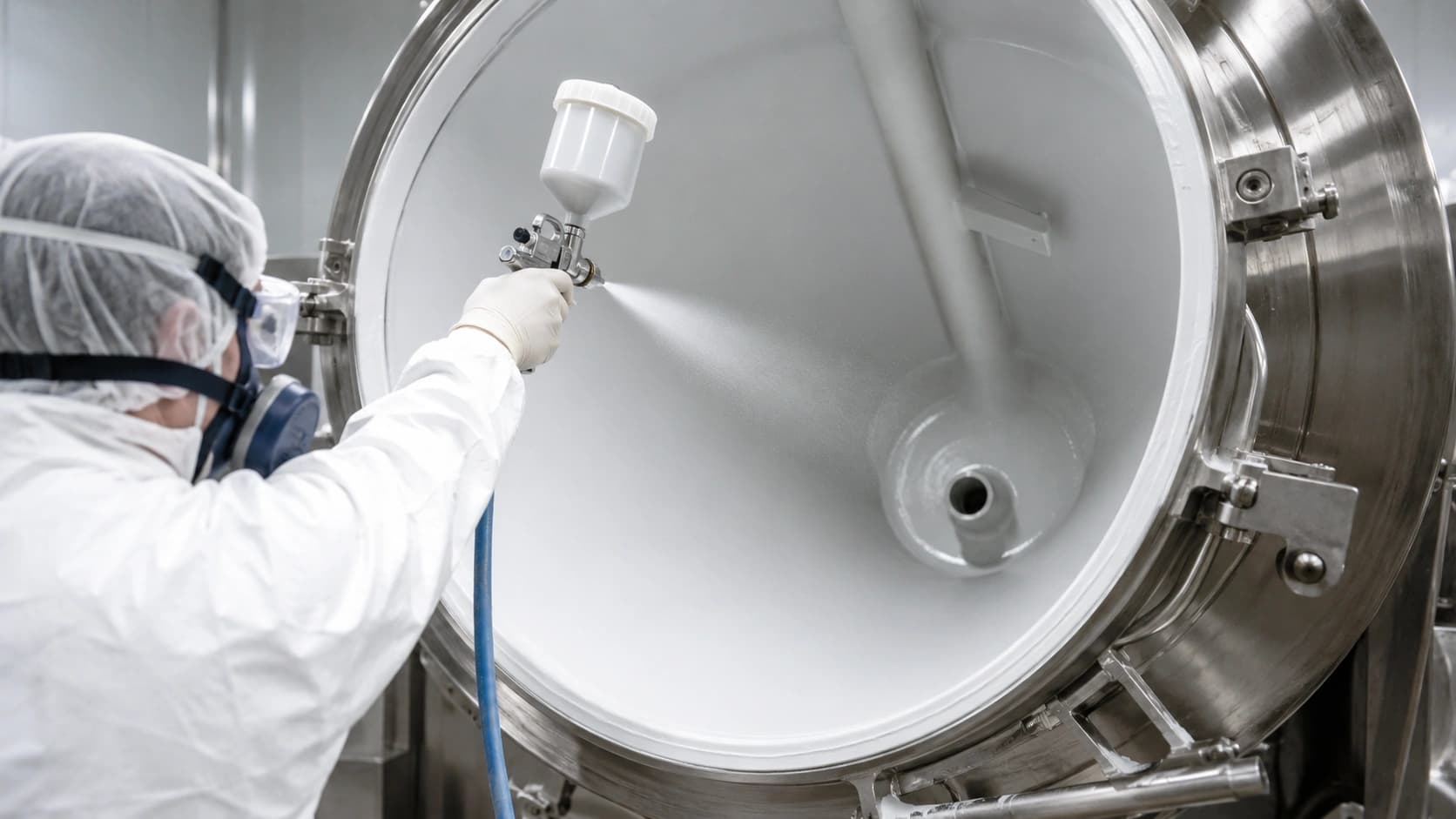
Old coating and residue are burnt off in our burn-off oven. New parts go through the same step to clean the metal.
- 3
Grit blast
The part is blasted back to clean, rough metal so the new coating bonds.
- 4
Apply and cure
We spray the primer and topcoat and cure each to the supplier’s schedule.
- 5
Check and pack
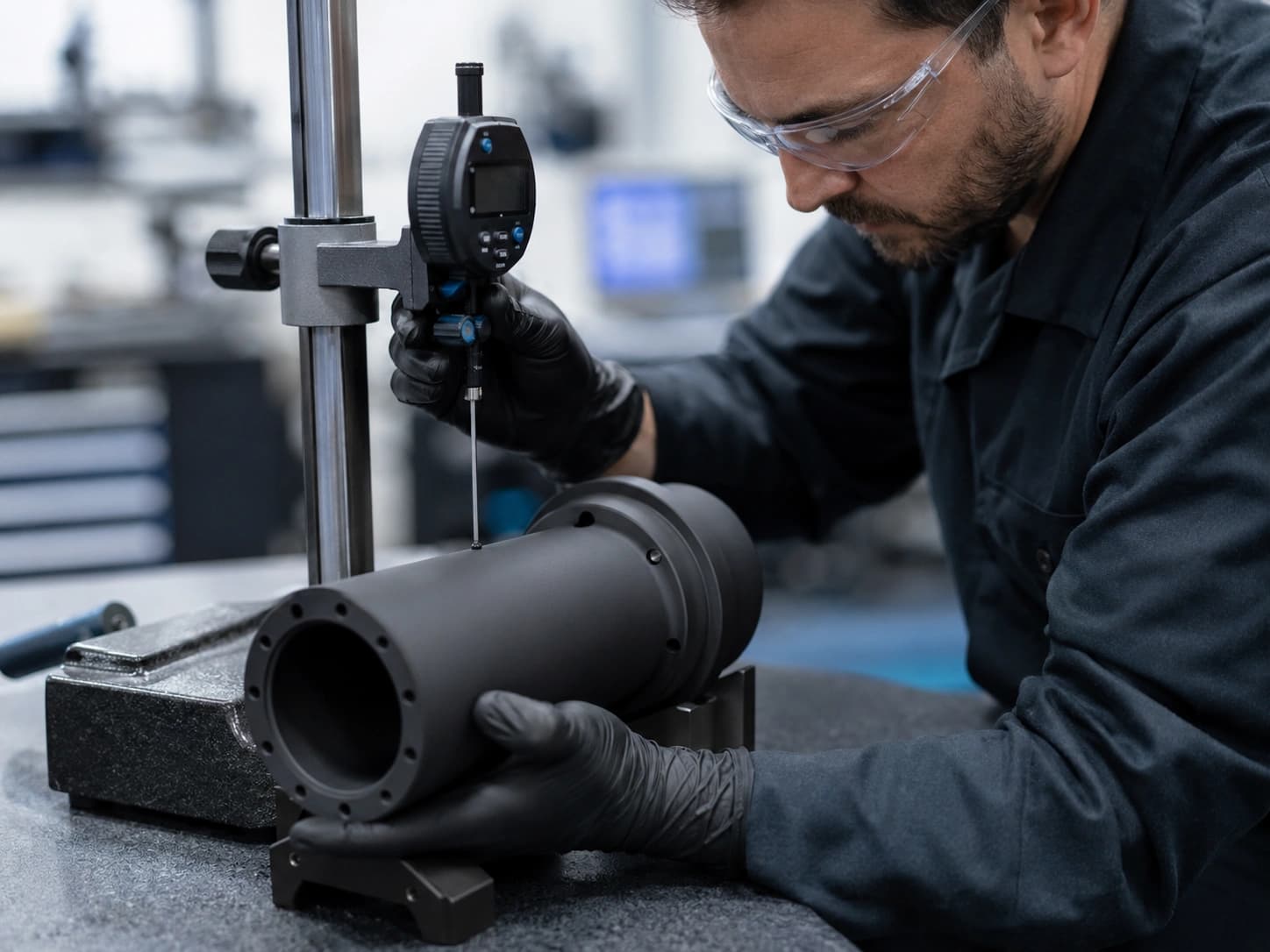
We measure film thickness, inspect the finish and pack the parts for freight back to your site.
Before you send a part: a quick check
- Heat: the part must take cure temperatures of about 360–415 °C, depending on the system. Remove seals, plastics, bearings and electronics.
- Sealed parts: closed drums or welded-shut sections need a small vent hole (about 3 mm), or trapped air expands in the oven.
- Bare areas: mark faces, bores and threads that must stay uncoated on the drawing.
- Hang point: parts coated all over are hung in the oven and keep a small uncoated mark at the hang point. Nominate a spot if it matters.
- Size: parts up to 7 m × 3 m × 3 m fit our ovens. Longer parts up to 8 m can load diagonally.
- Duty: tell us the product, cleaning chemicals and temperatures the part sees.
Related reading
See how Xylan Thyme Green performs on production moulds in our Xylan mould release case study. For bakeries and other food lines, see food processing coatings and our non-stick coatings overview.
AST is the only Chemours-licensed industrial fluoropolymer applicator in Australia, New Zealand and South East Asia, with technical and quality audits by Chemours Global. We also apply Whitford/PPG Xylan, so the recommendation follows the part rather than one product range. Dairy processors including Fonterra, Saputo Dairy and Bega Cheese trust AST with their coating work. Every job carries a lifetime workmanship warranty.
Frequently Asked Questions
What is the best coating for cheese machinery?
Are these coatings food safe?
What is the difference between Xylan Thyme Green and Xylan off-white?
Is Xylan the same as Teflon?
Can you recoat our parts during a shutdown?
Can you put a fresh coat over the old one?
Will the coating stand up to our washdown chemicals?
Why not Halar or Tefzel for dairy equipment?
How large a part can you coat?
Do you work with dairy plants outside Victoria?
Only Chemours-licensed industrial fluoropolymer applicator in Australia, New Zealand and South East Asia
Yearly technical and quality audits by Chemours Global
Lifetime warranty on workmanship
Planning a shutdown or fighting sticking product?
Send us the part list, photos or drawings and your shutdown dates. We will recommend the right coating and quote it.