



















FEP Coating Services
FEP is the Chemours Teflon™ fluoropolymer for release. It melts and flows into a smooth, non-porous film that suits dough hoppers, augers, rollers and processing trays up to 205 °C.
Melbourne-based, serving all of Australia and New Zealand, with a lifetime workmanship warranty and a typical turnaround of 7–10 working days from receipt of parts.
Short answer: FEP (fluorinated ethylene propylene) is one of the three Chemours Teflon™ non-stick resins, with PTFE and PFA. It melts and flows in the oven into a smooth, non-porous film, and Chemours rates it best of the three for release where abrasion is low. It is rated to 205 °C continuous. Choose FEP for dough contact and light-wear release. Choose PFA when the part runs hotter or wears harder.
What FEP brings
Release
Chemours rates FEP best of its three non-stick resins for release where abrasion is low.
Non-porous film
FEP melts and flows in the oven, so the cured film has no pores for product to key into.
Low friction
Static friction of 0.12–0.20 on the cured coating.
Food contact
Chemours letters on file cite US FDA 21 CFR 175.300 for the systems we apply.
Electrical insulation
A good electrical insulator; Chemours data on request.
Moderate heat
Rated to 205 °C continuous and 230 °C intermittent.
AST FEP coating at a glance
| Material | Chemours Teflon™ FEP (fluorinated ethylene propylene) over a Chemours primer |
| Application | Powder sprayed over the primer, then cured in our ovens |
| Film build | 25–45 µm per FEP powder coat |
| Cure | 380–390 °C metal temperature |
| Service temperature | 205 °C continuous; 230 °C intermittent |
| Colour | Pewter or black |
| Substrates | Carbon steel, stainless steel and aluminium |
| Food contact | US FDA 21 CFR 175.300 (Chemours letters on file); made without PFOA |
| Largest part | Oven 7 m × 3 m × 3 m; up to 8 m loaded diagonally |
| Turnaround | Typically 7–10 working days from receipt |
PTFE vs FEP vs PFA
All three are Chemours Teflon™ fluoropolymers. The choice is a trade-off: FEP gives the most release, while PTFE and PFA handle more heat, and PFA handles more wear. These are Chemours coating figures:
| PTFE | FEP | PFA | |
|---|---|---|---|
| Continuous / intermittent use | 260 / 315 °C | 205 / 230 °C | 260 / 290 °C |
| Film | Thin, with fine pores | Melts and flows; non-porous | Melts and flows; non-porous; builds thickest |
| Release | Good | Best of the three at low abrasion | Good |
| Static friction | 0.12–0.15 | 0.12–0.20 | 0.2 |
| Chemours rates it best for | Heat, non-stick | Non-stick | Chemical resistance, heat, abrasion |
A multi-coat system is rated by its topcoat. A PFA system with an FEP topcoat is a 205 °C system, not a 260 °C one. For high-heat or abrasive duty, see PFA coating services. For thin-film non-stick, see PTFE and Teflon™ coating services. For an overview of all three, see non-stick coatings.
Typical FEP coating applications
Dough hoppers and chutes
Inside faces and flange faces coated for dough release. The outside can be bead blasted to remove heat stain.
Dough bins and rounder parts
Release on surfaces that handle dough all shift with little abrasion.
Processing trays
Trays that carry product through processing below 205 °C.
Augers and mixer parts
Augers for cheese and food lines, and mixer bodies and augers in confectionery.
Rollers
Dough and process rollers that need a smooth, non-porous release surface.
Release where wear is light
Any part where release matters more than abrasion or high heat.
Most of our FEP work is for bakeries and food plants. See coatings for food processing.
How AST applies FEP
- 1
Inspect and mask
We check the part against your drawing and mask any faces that must stay bare.
- 2
Burn off
Old coating is burnt off. New parts go through the same step to drive contaminants out of the metal.
- 3
Grit blast
The part is blasted back to clean, rough metal so the primer can bond.
- 4
Prime and spray
A thin Chemours primer goes on first, then the FEP powder is sprayed over it.
- 5
Cure
The coating is cured at 380–390 °C metal temperature. Each coat is cured before the next.
- 6
Check and pack
We unmask, measure film thickness, inspect the finish and pack for freight.
Food contact
The Chemours primer and FEP topcoat systems we apply are covered by Chemours food-contact letters citing US FDA 21 CFR 175.300. Chemours places compliance on correct application and full cure, so we cure every part to the fact sheet. The coatings are made without PFOA, and an IChEMS Letter of Conformity is available on request.
FEP is rated to 205 °C continuous. A bake or griddle that runs hotter rules it out; we will recommend PFA or PTFE instead. Halar and Tefzel are not offered for food contact.
Before you send a part: a quick check
- Size: does it fit within 7 m × 3 m × 3 m? Longer parts up to 8 m can load diagonally.
- Heat: the part must take the cure heat of about 390 °C. Remove seals, plastics, rubber and electronics.
- Metal: carbon steel, stainless steel and aluminium are suitable. Brass and other copper-rich alloys: ask us first, as some primer systems discolour on them; one-coat PTFE suits brass.
- Sealed cavities: closed tubes, rollers with welded end caps and blind sections need a small vent hole, or trapped air expands in the oven.
- Bare areas: mark threads, bores, seats and mating faces that must stay uncoated on the drawing.
- Duty: tell us what the part touches, how hot it runs and what wears it.
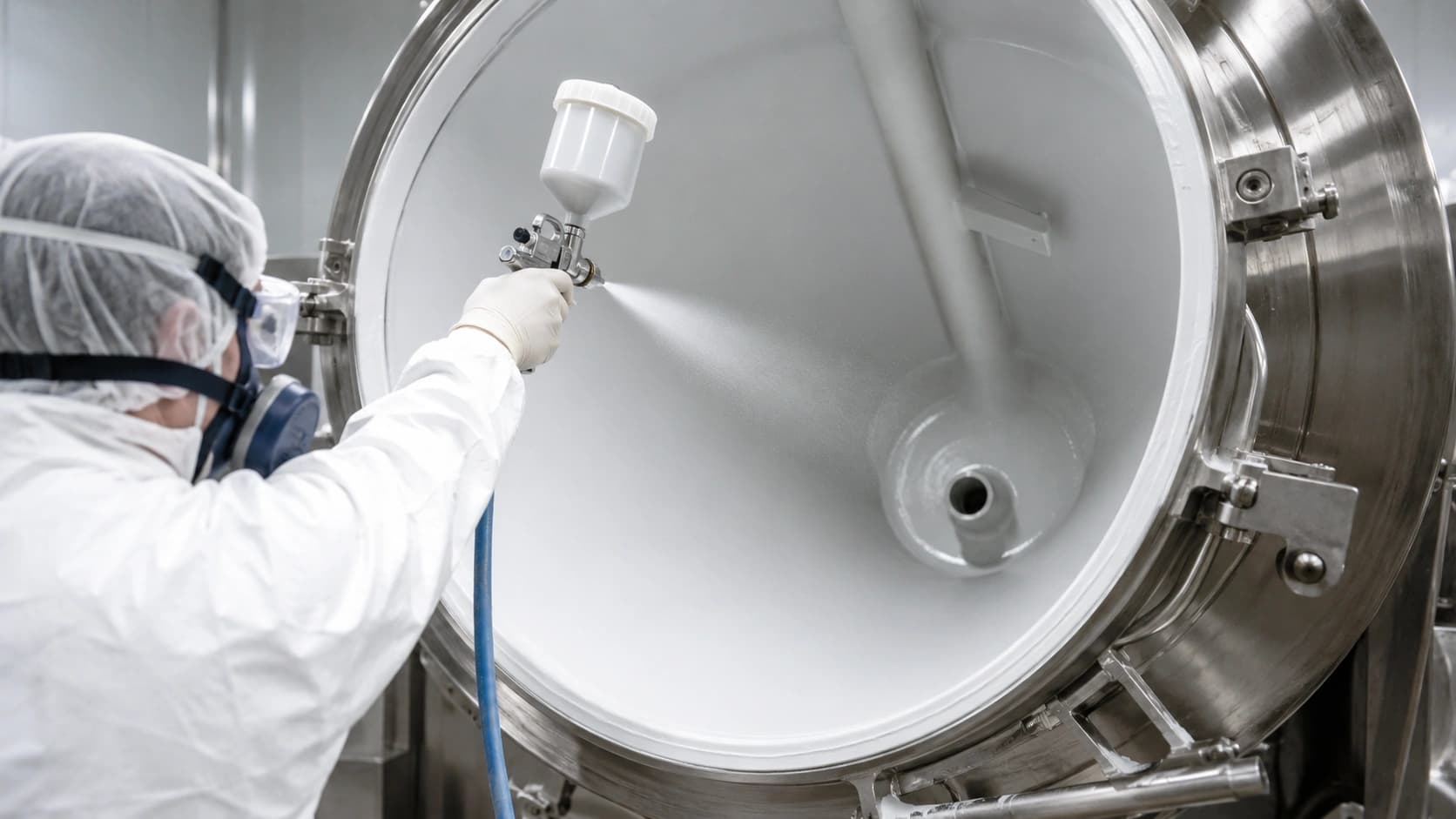
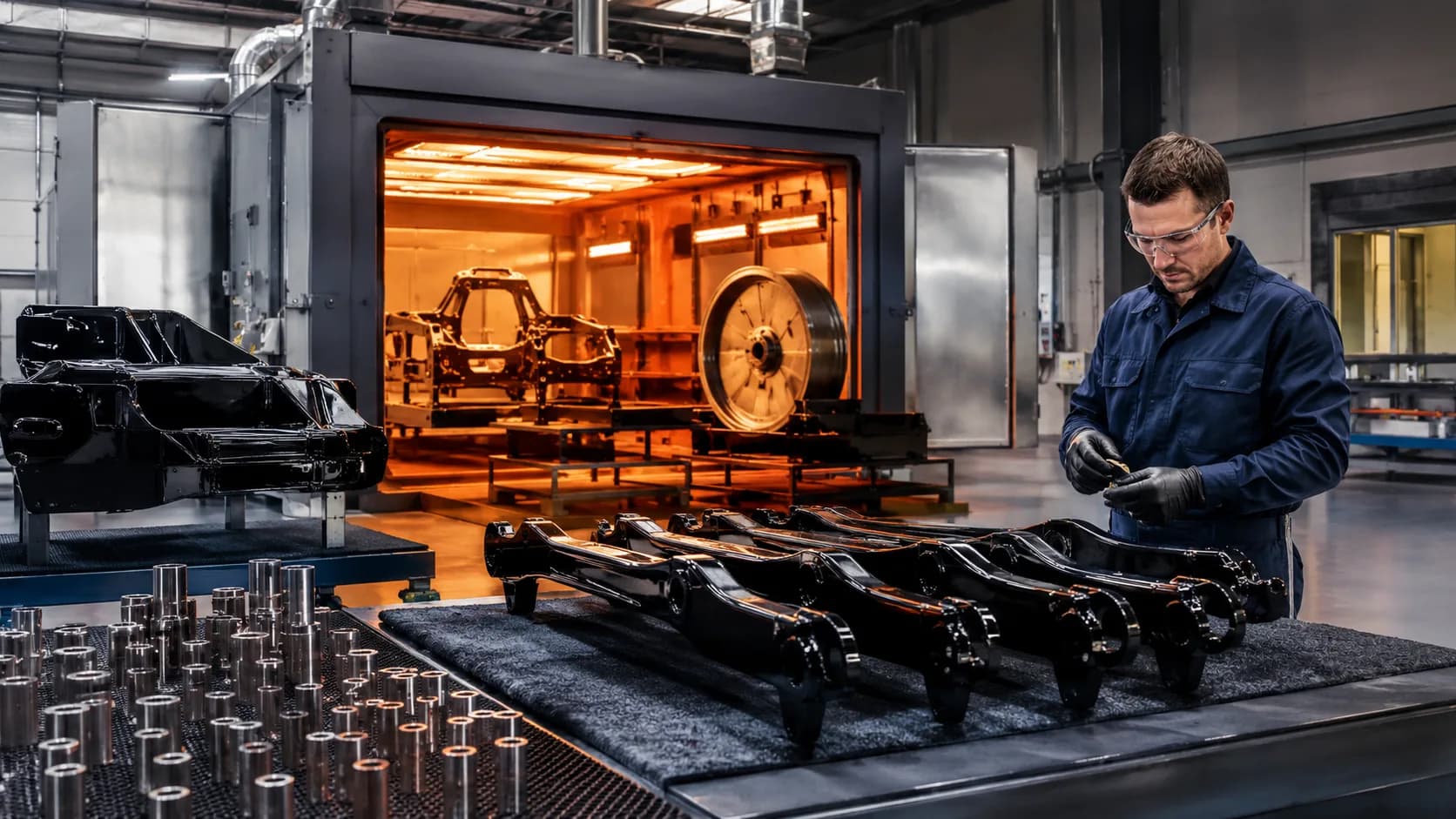
AST is the only Chemours-licensed industrial fluoropolymer applicator in Australia, New Zealand and South East Asia, with technical and quality audits by Chemours Global. We have specialised in industrial fluoropolymer coatings for more than 40 years, for food producers including Goodman Fielder, George Weston Foods, Allied Pinnacle, Aryzta, Fonterra and Saputo Dairy. Because we apply PTFE, FEP and PFA, the recommendation follows the duty. Every job carries a lifetime workmanship warranty.
Frequently Asked Questions
What is FEP coating?
What is the difference between FEP and PTFE?
What is the difference between FEP and PFA?
Is FEP coating food safe?
What temperature can FEP coating handle?
Is FEP good for abrasive duty?
What can AST coat in FEP?
Can worn FEP be recoated?
How long does FEP coating take?
Only Chemours-licensed industrial fluoropolymer applicator in Australia, New Zealand and South East Asia
Yearly technical and quality audits by Chemours Global
Lifetime warranty on workmanship
Need better release on a hopper, auger or roller?
Send us the part drawing, what it handles and how hot it runs. We will recommend the right Teflon™ system and quote it.