



















Teflon™ Coating for Heat-Seal Jaws & Packaging Machinery
AST coats and recoats heat-seal jaws, seal bars, heating plates, grill plates and hot-melt glue pots with Teflon™ non-stick coatings. A thin film of 20–35 µm releases packaging film at sealing temperature, so jaws stay cleaner for longer.
We serve packaging lines across Australia and New Zealand, with a lifetime workmanship warranty and a typical turnaround of 7–10 working days from receipt of parts.
Short answer: for heat-seal jaws and seal bars, AST applies a thin Teflon™ PTFE film of about 20–35 µm, rated for service up to 260 °C. Where a part needs a tougher film, or a hot-melt glue pot or roller needs release, we use Teflon™ PFA. Worn parts are stripped to bare metal and recoated, never coated over. The part must take a cure of about 360–415 °C.
The problem on packaging lines
Film build-up on seal faces
Melted film and coated board stick to hot jaws. The seal gets weaker and the line stops for cleaning.
Product in the seal area
Powder, sauce or crumbs on the seal face bake on and need scraping.
Glue on pots and rollers
Hot-melt glue builds up in pots, tanks and on rollers and is hard to remove.
Worn coating
Scraping and cleaning wear the old coating thin. Bare spots stick first.
A non-stick coating on the hot faces lets film, product and glue release instead of building up. Cleaning is quicker, and the line spends less time stopped.
Which coating for which part
| Part | Coating | Why |
|---|---|---|
| Heat-seal jaws and seal bars (flow-wrappers, form-fill-seal, shrink-wrap) | Teflon™ PTFE, thin film 20–35 µm | Releases film at sealing temperature. Thin enough to keep the jaw face close to size. Rated to 260 °C. |
| Heat-seal and heating plates (thermoformers, tray sealers) | Teflon™ PTFE one-coat | Our standard for seal plates. Blended with other resins for toughness and abrasion, with a non-stick surface. Rated to 260 °C. |
| Seal bars coated all over, or needing a tougher film | Teflon™ PFA | Melts and flows into a non-porous film. Builds thicker and is tougher than PTFE. Rated to 260 °C. |
| Grill and contact plates | Teflon™ PTFE | Non-stick release on hot cooking faces. Food-contact systems comply with US FDA 21 CFR 175.300. |
| Shrink-wrap cutting blades | Teflon™ PFA | A tough non-stick film on blades that cut through hot film. |
| Hot-melt glue pots, tanks and rollers | Teflon™ PFA | Hot-melt glue releases from the surface. Stripped and recoated when the film wears. |
| Release rollers and mould rollers | Xylan (Whitford/PPG) dry film | A thin, FDA-acceptable release film for rollers and fixtures. Ask us which bases suit it. |
More on each system: Teflon coating services, PFA coating, non-stick coatings and Xylan coating.
Heat-seal jaws and seal bars
Seal jaws are the parts we coat most often for packaging lines. A few points decide how we coat them:
- Thin film: PTFE goes on at about 20–35 µm in total, so the jaw face changes very little in size.
- Temperature: the PTFE and PFA systems we use are rated for service up to 260 °C. Tell us your set temperature.
- Working faces only: we plug heater and bolt holes and leave the mounting face bare where you need it.
- Brass and aluminium: we coat steel, stainless, aluminium and brass seal bars. Aluminium is burnt off at a lower temperature than steel.
- Food lines: our food-contact Teflon™ systems comply with US FDA 21 CFR 175.300 when cured to the data sheet.
Machine types we coat for include thermoformers, flow-wrappers, form-fill-seal machines, tray sealers and shrink-wrap lines.
Hot-melt glue pots, tanks and rollers
Gluing and labelling lines use heated pots, tanks and rollers that collect hot-melt glue. We coat them in Teflon™ PFA so the glue releases and the parts clean up faster. When the film wears, we strip the part to bare metal and recoat it. Some customers send their pots and rollers back on a regular cycle.
For release rollers and mould rollers that do not need a Teflon™ system, a Xylan dry film is another option. We review the duty and the base metal before we recommend either.
Worn parts: strip and recoat, never overcoat
A cured non-stick coating is made so that nothing sticks to it, and that includes a new coat. A coat over the top risks peeling. So every worn jaw, plate or pot is burnt off, grit blasted back to bare metal and recoated from the start.
Recoating keeps your existing jaws and plates in service. See our Teflon recoating services.
How AST coats seal jaws and plates
- 1
Inspect and record
We check each part against your drawing or notes, and record bolt holes, datums and faces that must stay bare.
- 2
Strip to bare metal
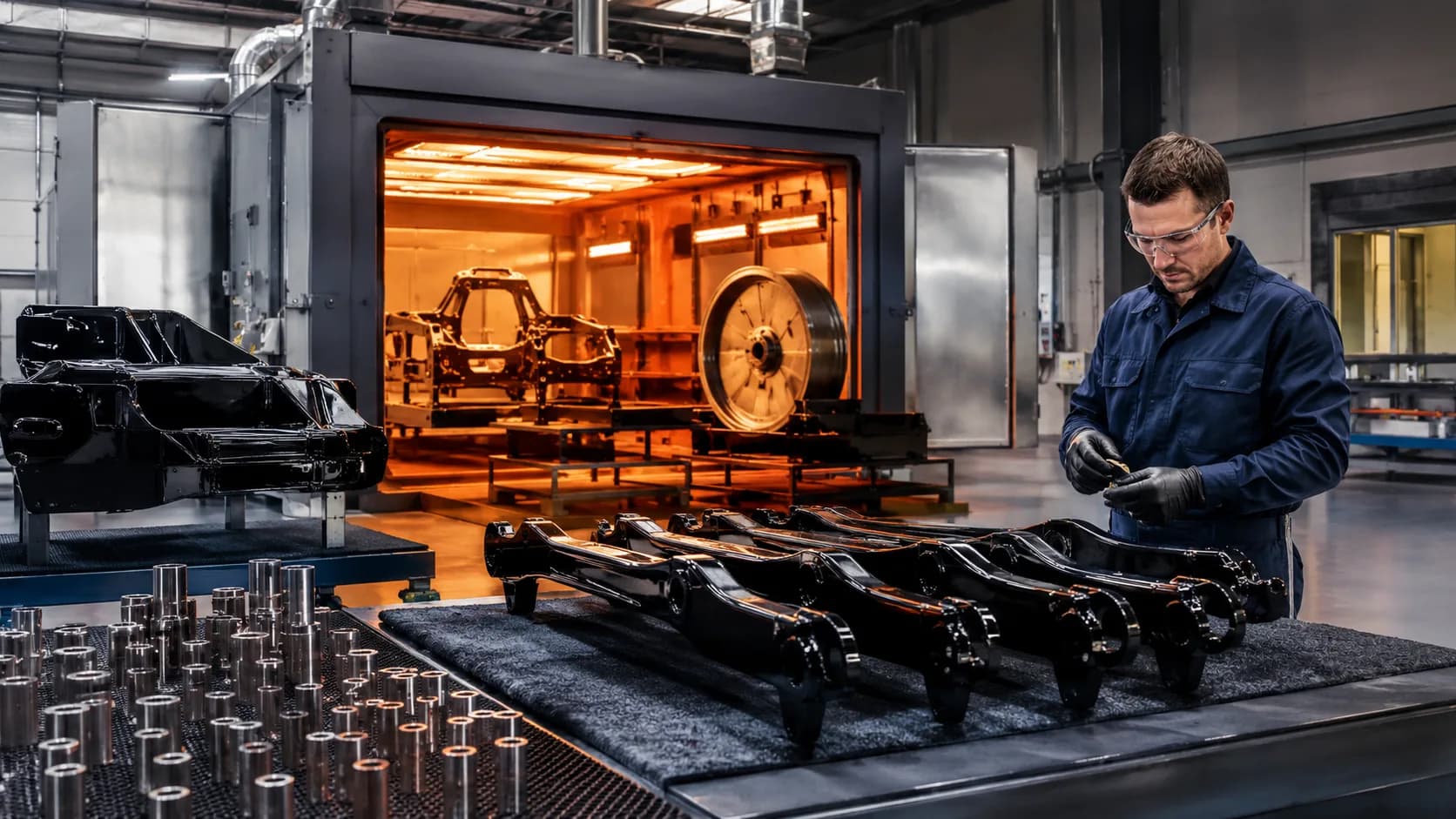
Old coating, carbon and oil are burnt off in a burn-off oven. New parts go through the same step to drive off contaminants.
- 3
Grit blast
The part is blasted to clean, keyed metal so the coating grips. Faces marked "do not blast" are protected.
- 4
Plug and mask
We plug heater and bolt holes and mask mounting faces, so only the working faces are coated.
- 5
Apply and cure
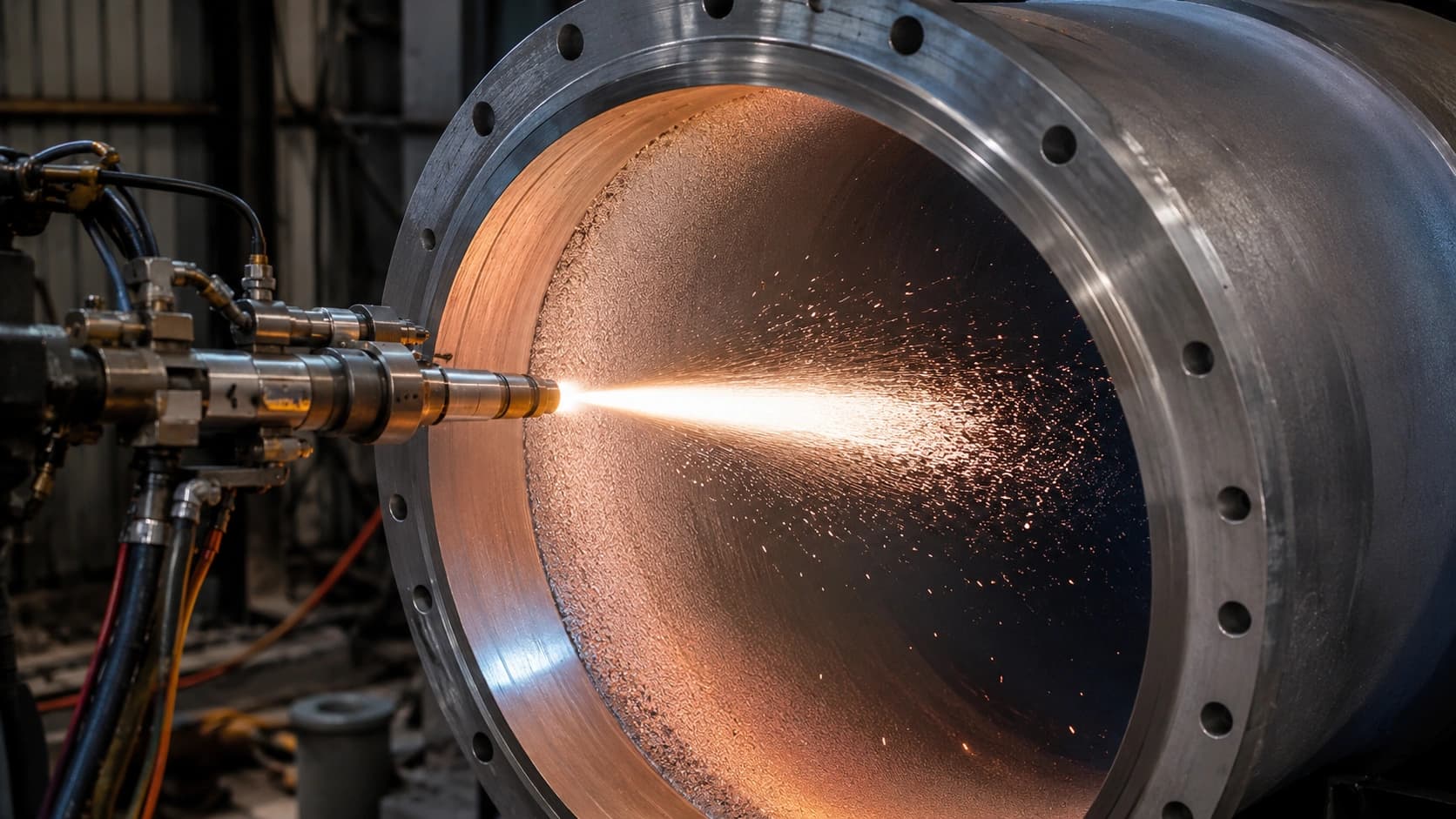
The coating is sprayed and cured in our ovens at the temperature on the maker's data sheet.
- 6
Check and pack
We unmask, measure film thickness, inspect the finish and pack the parts for freight.
Before you send a part: a quick check
- Heat: the part must take a cure of about 360–415 °C. Remove heater cartridges, thermocouples, seals, plastics and wiring.
- Sealed cavities: hollow or welded-shut sections need a small vent hole (about 3 mm), or trapped air expands in the oven.
- Bare areas and datums: mark bolt holes, threads, mounting faces and datum faces that must stay uncoated.
- Coated all over: the part hangs during coating and cure, so a small uncoated mark stays at the hang point. Nominate a spot if it matters.
- Material: tell us the base metal. Thin or perforated aluminium needs a low-temperature trial first, and you accept the loss risk in writing.
- Size: our ovens take parts up to 7 m × 3 m × 3 m, and up to 8 m long loaded diagonally.
- Duty: tell us the sealing temperature, the film or product, and how the jaws are cleaned.
Packaging on a food line? See also food processing coatings.
AST is the only Chemours-licensed industrial fluoropolymer applicator in Australia, New Zealand and South East Asia, with technical and quality audits by Chemours Global. We coat and recoat seal jaws, heating plates and glue pots for packaging lines across the region. Every job carries a lifetime workmanship warranty.
Frequently Asked Questions
What is the best coating for heat-seal jaws and seal bars?
What sealing temperature can the coating handle?
Can you recoat worn or damaged seal jaws?
Can you put a new coat over the old one?
Are the coatings safe for food packaging lines?
What metals can you coat?
Do you coat hot-melt glue pots and rollers?
Do I need to remove heaters and sensors before sending the part?
How long does the coating last?
How long does a job take?
Only Chemours-licensed industrial fluoropolymer applicator in Australia, New Zealand and South East Asia
Yearly technical and quality audits by Chemours Global
Lifetime warranty on workmanship
Seal jaws sticking or worn?
Send us the part, the sealing temperature and what builds up on it today. We will recommend the right coating and quote it.