



















Rilsan® Nylon 11 (PA11) Coating
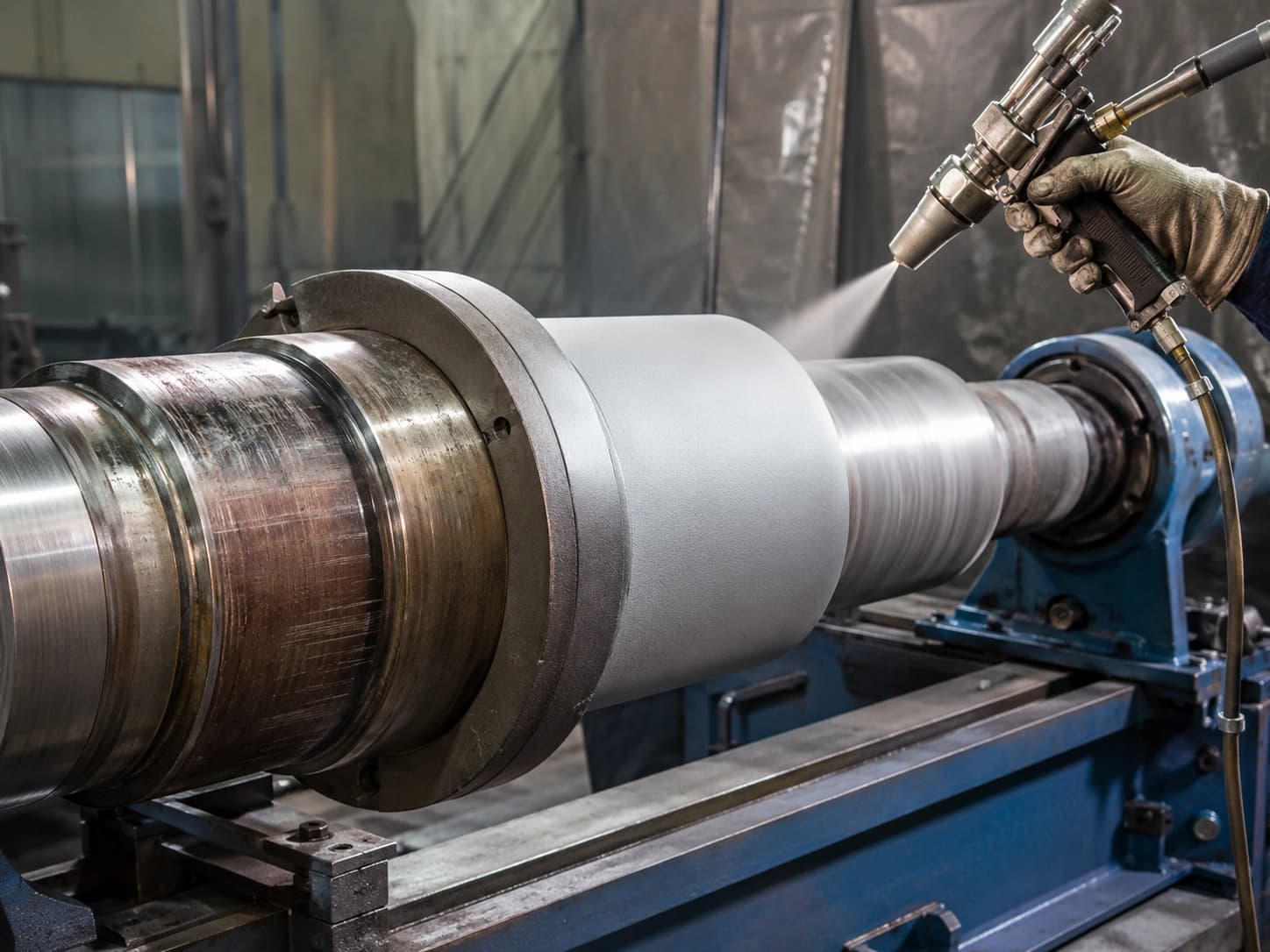
Rilsan is Arkema's nylon 11 (PA11): a tough, thick plastic skin for metal parts that get knocked, worn and wet. AST applies it by electrostatic spray at 300–500 µm, so we can mask machined faces and coat parts up to 7 m long.
Melbourne-based, serving all of Australia and New Zealand, with a lifetime workmanship warranty and a typical turnaround of 7–10 working days from receipt of parts.
Short answer: Rilsan is a nylon 11 powder coating made from castor oil. It melts onto the part as a thick, tough skin that resists impact, abrasion and corrosion. AST sprays it electrostatically to 300–500 µm (up to 1 mm), which suits valves, pipe spools, handles and large or partly masked parts. Choose it when a part is knocked and worn rather than heated or chemically attacked.
What Rilsan brings
Impact resistant
Takes knocks without chipping.
Abrasion resistant
Holds up to sliding, dragging and handling wear.
Corrosion protection
A thick, continuous skin that keeps water, salt and chemicals off the metal.
Thick film
300–500 µm as standard, up to 1 mm — about ten times a fluoropolymer dry film.
Electrically insulating
Useful on handles and brackets near electrical equipment.
Bio-based
Polyamide 11 is made from castor oil, not petrochemicals.
AST Rilsan coating at a glance
| Material | Arkema Rilsan® polyamide 11 (nylon 11, PA11), made from castor oil |
| Application | Electrostatic spray onto preheated parts, built up in passes |
| Film build | 300–500 µm standard; up to 1 mm on request |
| Service temperature | Confirmed per job from the Arkema data sheet |
| Colour | Black as standard; ask about others |
| Substrates | Steel, cast iron, stainless steel and aluminium that can take the fusing heat (around 220 °C) |
| Food contact | Available on request, after review |
| Largest part | Oven 7 m × 3 m × 3 m; up to 8 m loaded diagonally |
| Turnaround | Typically 7–10 working days from receipt |
Electrostatic spray vs fluidised-bed dipping
Nylon 11 goes on in one of two ways. Most nylon coaters dip a hot part into a tank of fluidised powder. AST sprays the powder electrostatically onto a preheated part and builds the film in passes. Each method suits different work:
| Electrostatic spray (AST) | Fluidised-bed dip | |
|---|---|---|
| Part size | Up to 7 m (8 m diagonal) | Limited by the dip tank |
| Masking and partial coating | Yes: threads, seats, bores and faces left bare | Hard: everything that enters the tank is coated |
| Film build | 300–500 µm standard, up to 1 mm | Typically 250–500 µm |
| Best for | Valves, spools, shafts, handles, one-offs and short runs | High-volume wire goods, dishwasher baskets, thin wire |
If your part is a high-volume wire product, a dip shop will usually serve you better, and we will say so. If it is large, machined, needs masking or sits in an assembly with fluoropolymer-coated parts, electrostatic spray at AST is the fit.
Chemical resistance
Generally resists
- Fresh water, salt water and weather
- Mineral salts
- Alkalis
- Fuels, oils and greases
- Most solvents
- Organic acids
Resistance depends on concentration and temperature. Send us the chemical, strength and temperature, and we check it against Arkema's resistance data before we quote.
How AST applies Rilsan
- 1
Inspect and mask
We check the part against your drawing and mask threads, seats, bores and any faces that must stay bare.
- 2
Strip and clean
Old coatings and contamination are burnt off, then the part is grit blasted to clean, rough metal for adhesion.
- 3
Preheat and spray
The part is preheated and the nylon powder is sprayed electrostatically, building the film in passes to the specified thickness.
- 4
Fuse
The powder melts and flows into a continuous, glossy skin in our ovens.
- 5
Check and pack
We unmask, measure film thickness, inspect the finish and pack for freight.
Typical Rilsan coating applications
Valves, flanges and fittings
Valve bodies, gates, flanged fittings and couplings for water, wastewater and process service. Seats, threads and faces masked.
Pipe spools and pipework
Long spools and fabricated pipework that are too big for a dip tank.
Handles, grips and levers
A warm, grippy, impact-resistant black finish on handles, levers and control hardware.
Shafts, splines and rollers
Wear and corrosion protection on shafts and splines, with bearing journals left bare.
Frames, brackets and conveyor hardware
Structural and handling parts that take knocks in mining, materials handling and manufacturing.
Marine and outdoor hardware
Salt-water and weather exposure where paint or galvanising wears through.
Before you send a part: a quick check
- Size: does it fit within 7 m × 3 m × 3 m? Longer parts up to 8 m can load diagonally.
- Heat: the part must take the fusing heat (around 220 °C). Remove seals, plastics, rubber and electronics.
- Sealed cavities: closed tubes or welded-shut sections need a small vent hole, or trapped air expands in the oven.
- Bare areas: mark threads, bores, seats and mating faces that must stay uncoated on the drawing.
- Duty: tell us what the part touches (water, chemicals, food) and the temperature range.
Rilsan or a fluoropolymer?
The two families solve different problems. Fluoropolymers are chosen for non-stick release, high temperature and chemical barrier duty: see our Teflon coating services, PFA, Halar and Tefzel. Rilsan is chosen when a part is knocked, dragged and worn and needs a thick, tough skin. For a low-friction dry film on bearings and fasteners, see Xylan.
Because we apply both families, the recommendation follows the duty, not our product list. Send us the part, how it is used and what fails on it today, and we will tell you which fits. Read our guide to Rilsan nylon 11 coating.

AST is the only Chemours-licensed industrial fluoropolymer applicator in Australia, New Zealand and South East Asia, with technical and quality audits by Chemours Global. Rilsan sits alongside that range, so the recommendation follows the duty rather than the shop's product list. Every job carries a lifetime workmanship warranty.
Frequently Asked Questions
What is Rilsan coating?
Is Rilsan the same as nylon 11 or PA11?
How thick is AST's Rilsan coating?
Does AST use fluidised-bed dipping or electrostatic spray?
What temperature can Rilsan handle?
What chemicals does Rilsan resist?
Is Rilsan food safe?
Can you coat valves for drinking water?
Can old Rilsan be stripped and recoated?
When should I use Rilsan instead of a fluoropolymer?
Only Chemours-licensed industrial fluoropolymer applicator in Australia, New Zealand and South East Asia
Yearly technical and quality audits by Chemours Global
Lifetime warranty on workmanship
Need a tough, thick coating on a valve, spool or handle?
Send us the part drawing, how it is used and what fails on it today. We will recommend the right system and quote it.