



















Teflon™ Coating for Bakeries & Dough Handling Equipment
AST coats and recoats strapped bread pan sets, baking trays, muffin cups, griddles, dough hoppers and rounder parts with food-grade Chemours Teflon™ coatings: PTFE, PFA, FEP and a one-coat system for direct-fire griddles.
We serve bakeries across Australia and New Zealand, with a typical turnaround of 7–10 working days from receipt of parts and a lifetime workmanship warranty.
Short answer: For bread pan and roll tray interiors, AST usually recommends Teflon™ PFA because it wears longer. PTFE is the lower-cost option and suits lids and flat trays. Dough hoppers and chutes suit FEP or PFA, and direct-fire griddles get a solvent-based Teflon™ one-coat made for that duty. Worn bakeware is stripped back to metal and recoated, never coated over, typically in 7–10 working days per batch. Recoats are typically good for around 1,500 bake cycles with PTFE and 3,500 with PFA, depending on handling and product.
The problems a coating solves in bakeries
Poor release
Loaves and rolls stick when the coating wears through, which damages product at depanning.
Oil and grease
A sound non-stick coating releases product with little or no pan oil.
Carbon build-up
Worn or bare metal holds baked-on carbon, so pans and trays take longer to clean.
Sticky dough
Dough hangs up in hoppers, chutes and dividers, slowing the line and wasting dough.
Which coating suits which part
This is where we usually start. We confirm the system after we see the part and hear how it runs.
| Part | Recommended system | Why |
|---|---|---|
| Strapped bread pan sets | Teflon™ PFA (inside) | Thicker film that wears longer under high-volume release |
| Roll, bun and hamburger trays | Teflon™ PFA | Same long-wearing release film as pan interiors |
| Flat trays, lids and pie pallets | Teflon™ PTFE | Thin non-stick film; the lower-cost option |
| Direct-fire griddles, hotplates and muffin cups | Solvent-based Teflon™ one-coat for direct-fire griddles | Made for direct-fire duty; rated to 260 °C |
| Dough hoppers, chutes and divider hoppers | Teflon™ FEP or PFA | FEP gives the best release at low abrasion; PFA where wear is higher |
| Rounder cones and guides | Metal spray base under thick PTFE | Textured surface so dough grips and rolls instead of sliding |
PTFE
A thin non-stick film, about 20–35 µm, rated to 260 °C in service. The budget choice for trays and lids. See Teflon coating services.
PFA
Melts and flows into a non-porous film, rated to 260 °C. Chemours rates it best of the three for abrasion. See PFA coating.
FEP
A non-porous film with the best release of the three at low abrasion, rated to 205 °C. Suits dough contact. See FEP coating.
How long a recoat lasts
Typically around 1,500 bake cycles for PTFE and 3,500 for PFA, depending on handling and product. That is an expectation, not a promise. Abrasive crusts, rough handling and harsh cleaning shorten it. Careful handling and the right system for the product lengthen it.
Recoat programs that keep the line running
- Strapped pan sets are stripped and recoated as complete assemblies. There is no need to take them apart.
- Large jobs run in batches, so you keep enough pan sets in service while one batch is with us.
- Sets travel in pallet batches, stacked upside down and strapped.
- Each batch is typically turned around in 7–10 working days from receipt.
Signs it is time to recoat
- Product starts to stick or tear at depanning.
- Bare metal shows through, often first along crests and contact lines.
- Carbon builds up on rims and walls and is hard to clean off.
Plan the recoat before the coating fails, not after. See how a batched program works in our bread pan recoating case study and on our Teflon recoating services page.
How we strip and recoat bakeware
- 1
Inspect
We check every set on arrival. Damaged pans are set aside and not coated.
- 2
Burn off
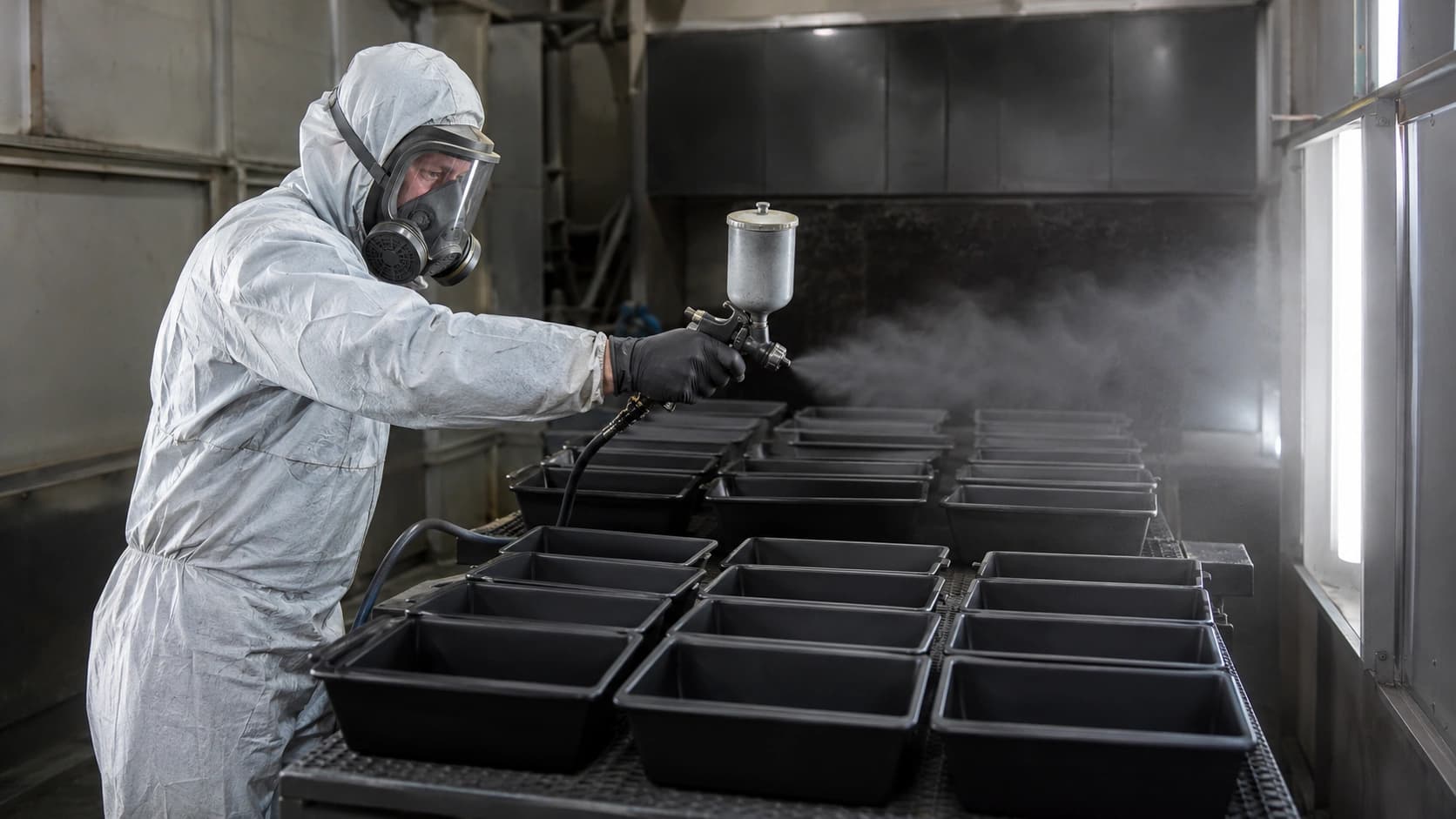
Old coating and baked-on carbon are burnt off in our burn-off oven. New pans go through the same step to clean the metal.
- 3
Grit blast
The pan is blasted back to clean, rough metal so the new coating bonds.
- 4
Prime and topcoat
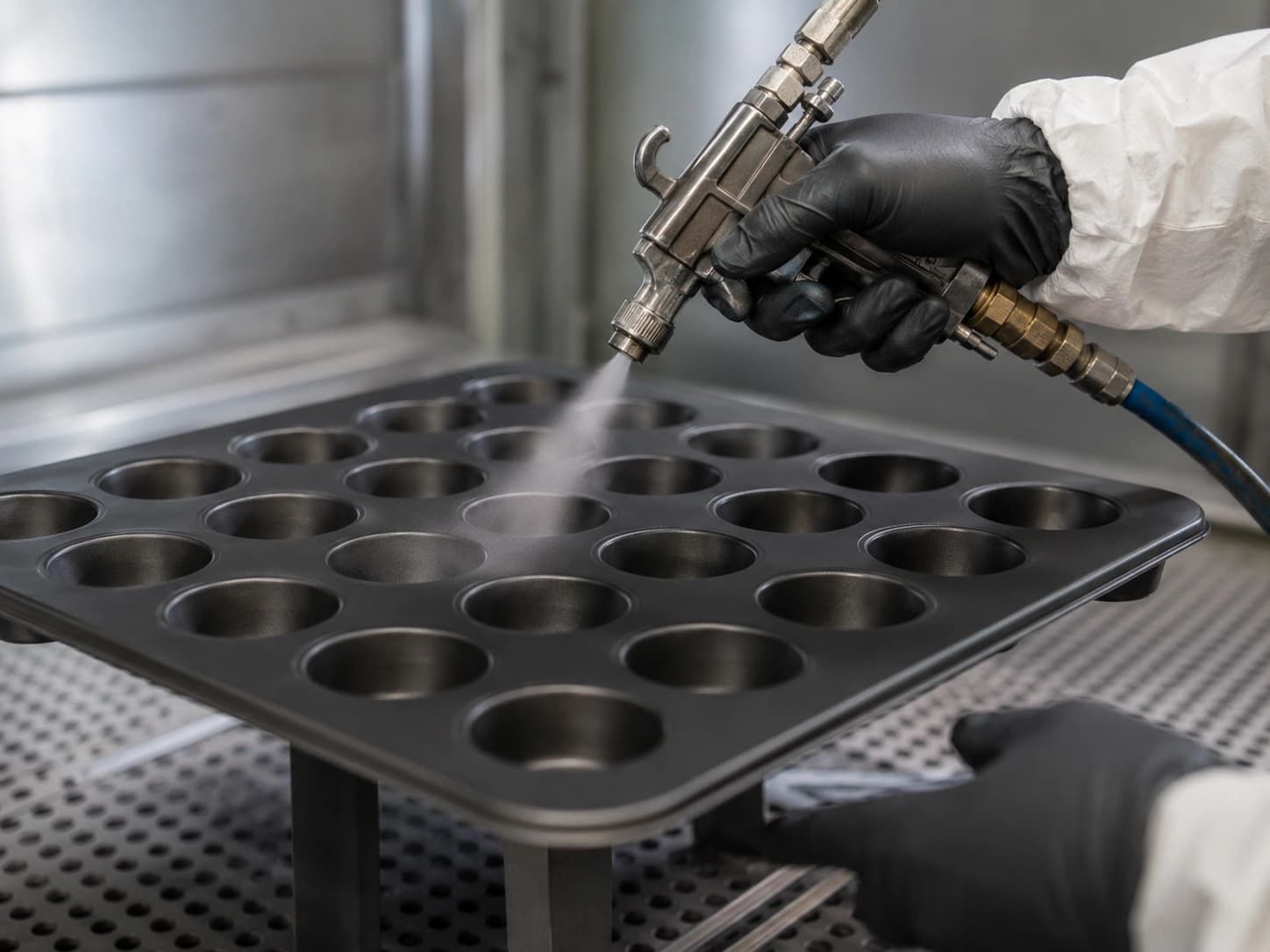
We prime straight after blasting to stop the metal oxidising, then apply the topcoat and cure each to the supplier’s schedule.
- 5
Check and pack
We measure film thickness, inspect the finish and pack the sets for freight back to your bakery.
We never lay a new coat over a worn one, because it does not bond well and can peel. Read more about coating stripping and burn-off.
Aluminium trays and food contact
- Aluminium trays can warp or soften in burn-off and blasting. For thin or perforated aluminium we run a low-temperature burn-off trial on one tray first, and you accept the loss risk in writing before the batch starts.
- The PTFE, PFA, FEP and griddle systems we use on bakeware are food-grade. The supplier food-contact letters we hold cite US FDA 21 CFR 175.300.
- Food compliance depends on correct application and full cure, which we control and record.
- Our Chemours Teflon™ coatings are made without PFOA. Our IChEMS Letter of Conformity is available on request.
- AST does not use Halar or Tefzel for direct food contact. They are chemical-barrier linings for process plant, not bakeware coatings.
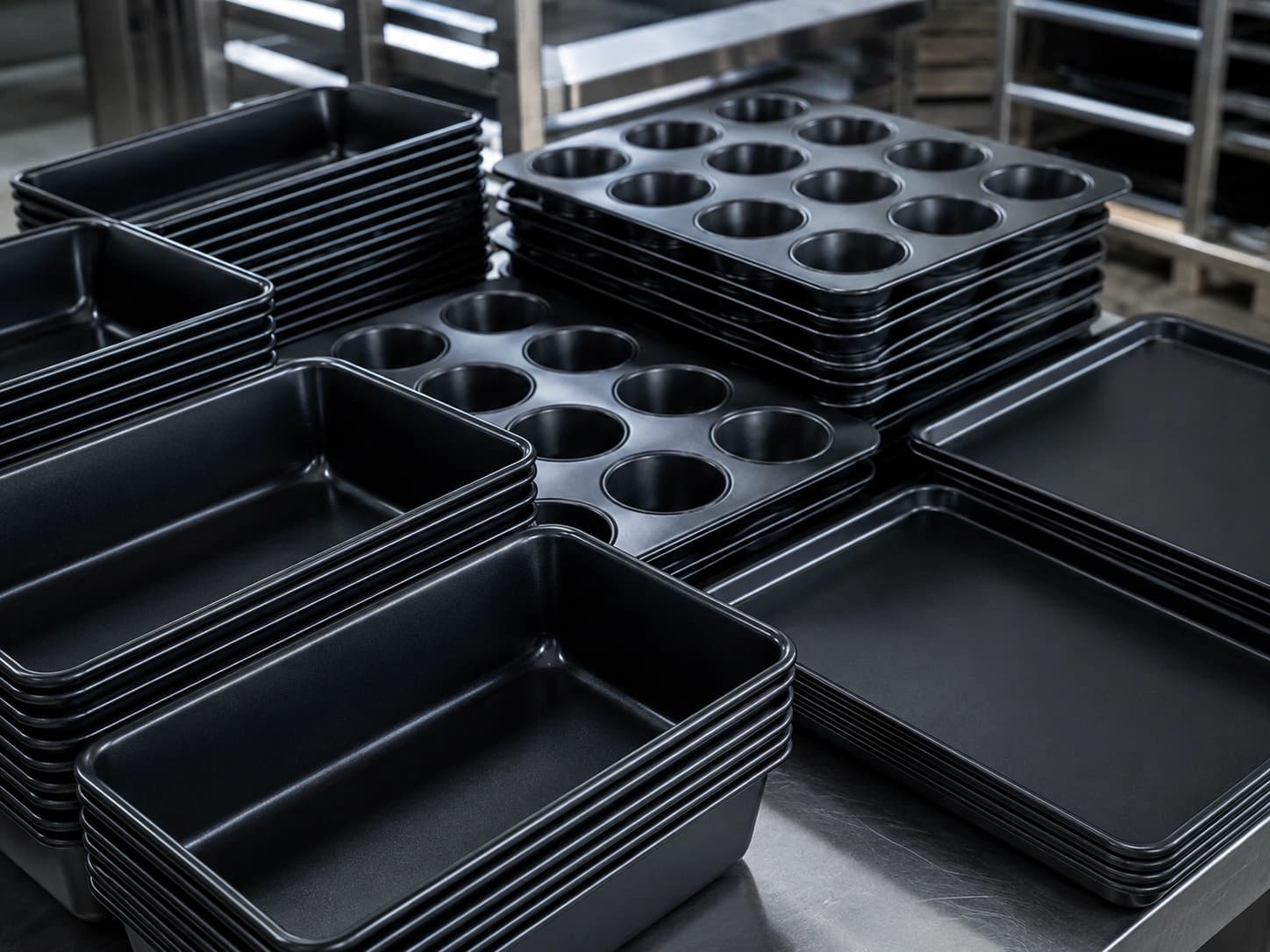
Typical bakery parts we coat
We are supplier-neutral. AST also coats bakeware from OEMs such as American Pan, KAAK, Kempf and SASA.
Before you send bakeware: a quick check
- Damage: we do not straighten, weld or reblock. Pull out pans with splits, broken braces, twist or holes in the base.
- Rust: tell us about pans stored outside or showing rust, so we can assess them before quoting.
- Aluminium: flag thin, perforated or cast aluminium trays so we can trial one first.
- Heat: parts must take cure temperatures of about 360–415 °C, depending on the system. Remove seals, plastics and bearings from dough handling parts.
- Quantity: tell us how many sets you can release at once, so we can plan the batches.
- Product: tell us what you bake and how the pans are cleaned.
Related reading
Read our guide to Teflon coating for bakeware. For other food lines, see food processing coatings and dairy and cheese processing.
AST is the only Chemours-licensed industrial fluoropolymer applicator in Australia, New Zealand and South East Asia, with technical and quality audits by Chemours Global. We have coated bakeware for Goodman Fielder, George Weston Foods (Tip Top), Allied Pinnacle and Aryzta. We also coat bakeware from OEMs such as American Pan, KAAK, Kempf and SASA. Every job carries a lifetime workmanship warranty.
Frequently Asked Questions
Which coating is best for bread pans?
How many bakes will a recoat last?
Are your bakery coatings food safe?
Do we need to take strapped pan sets apart before sending them?
Can you recoat our pans without stopping production?
Can you put a fresh coat over the old one?
Can you coat direct-fire griddles and hotplates?
Can you coat aluminium trays?
Do you repair damaged pans?
Do you work with bakeries outside Victoria?
Only Chemours-licensed industrial fluoropolymer applicator in Australia, New Zealand and South East Asia
Yearly technical and quality audits by Chemours Global
Lifetime warranty on workmanship
Pan sets or dough equipment due for a recoat?
Send us your part list, photos and the number of sets you can release at once. We will recommend the right coating, plan the batches and quote it.