


















Industrial Teflon Recoating & Refurbishment
AST recoats and refurbishes coated industrial equipment across Australia and New Zealand — Teflon (PTFE and PFA), Halar (ECTFE), Tefzel (ETFE) and Xylan systems. The worn film is removed completely, the substrate is re-prepared, and a full new coating system is applied and cured.
Turnaround is typically 7–10 working days from receipt of parts, and every recoat carries the same lifetime workmanship warranty as new work.
Short answer: industrial recoating is not a repair over a worn surface. The existing coating is fully removed by thermal burn-off, the substrate is re-prepared by silica and glass bead blasting, and a complete new coating system is applied and cured. A recoated part carries the same coating system, the same process and the same QA as a new coat — which is why recoating restores full performance rather than extending a tired one.
What industrial recoating involves
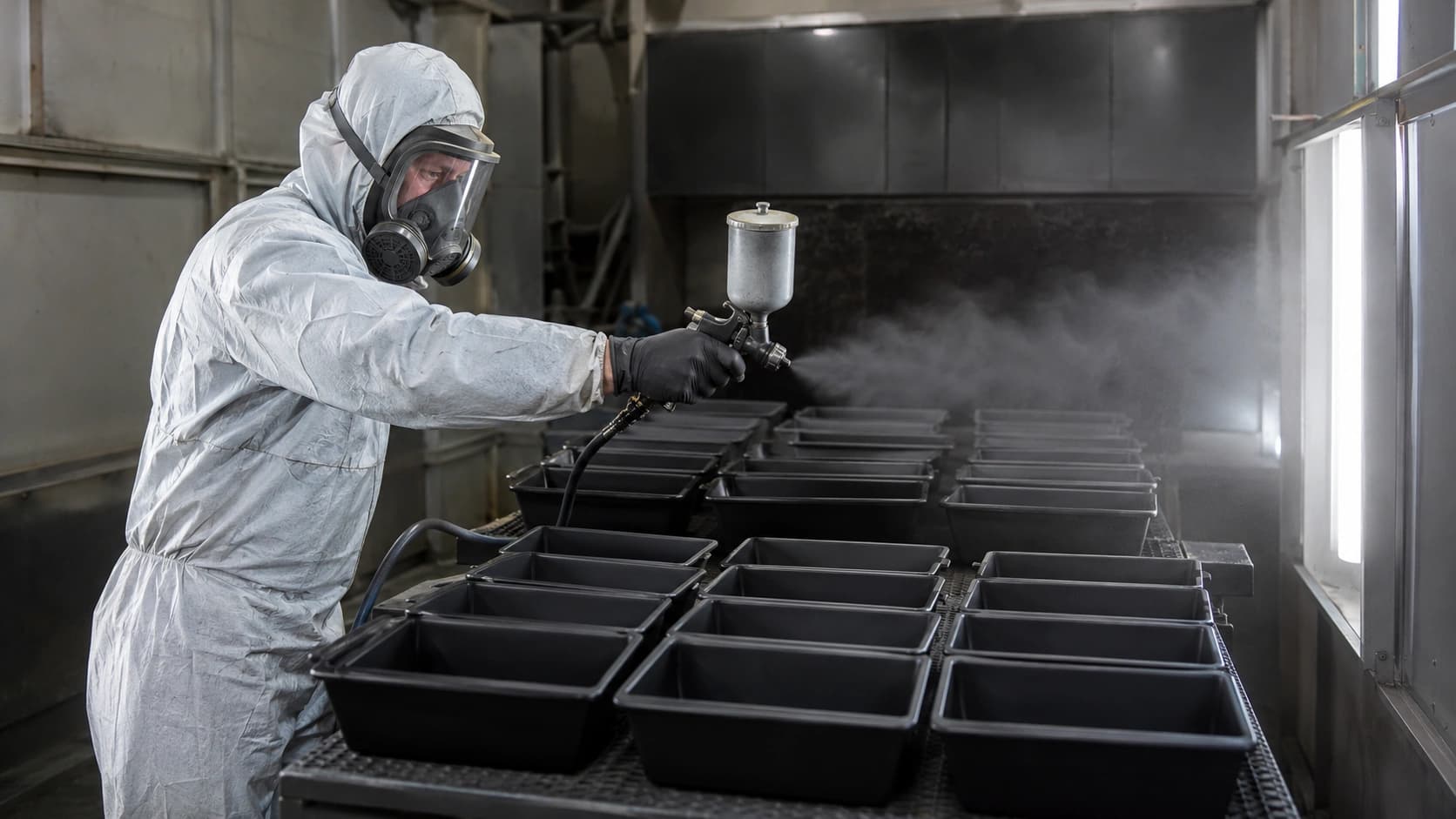
Recoating is not a new film laid over an old one. It starts by taking the part back to bare, clean, correctly profiled metal — the same starting point as a coating applied to a new part for the first time:
- 1Receive and inspect — every part is checked on arrival and the substrate condition confirmed before processing begins
- 2Thermal burn-off — the existing coating and organic residue are removed completely in a controlled oven
- 3Silica and glass bead blast — the substrate is re-prepared to the anchor profile the new coating system requires
- 4Prime and topcoat — the full coating system is applied by spray to the specified film build
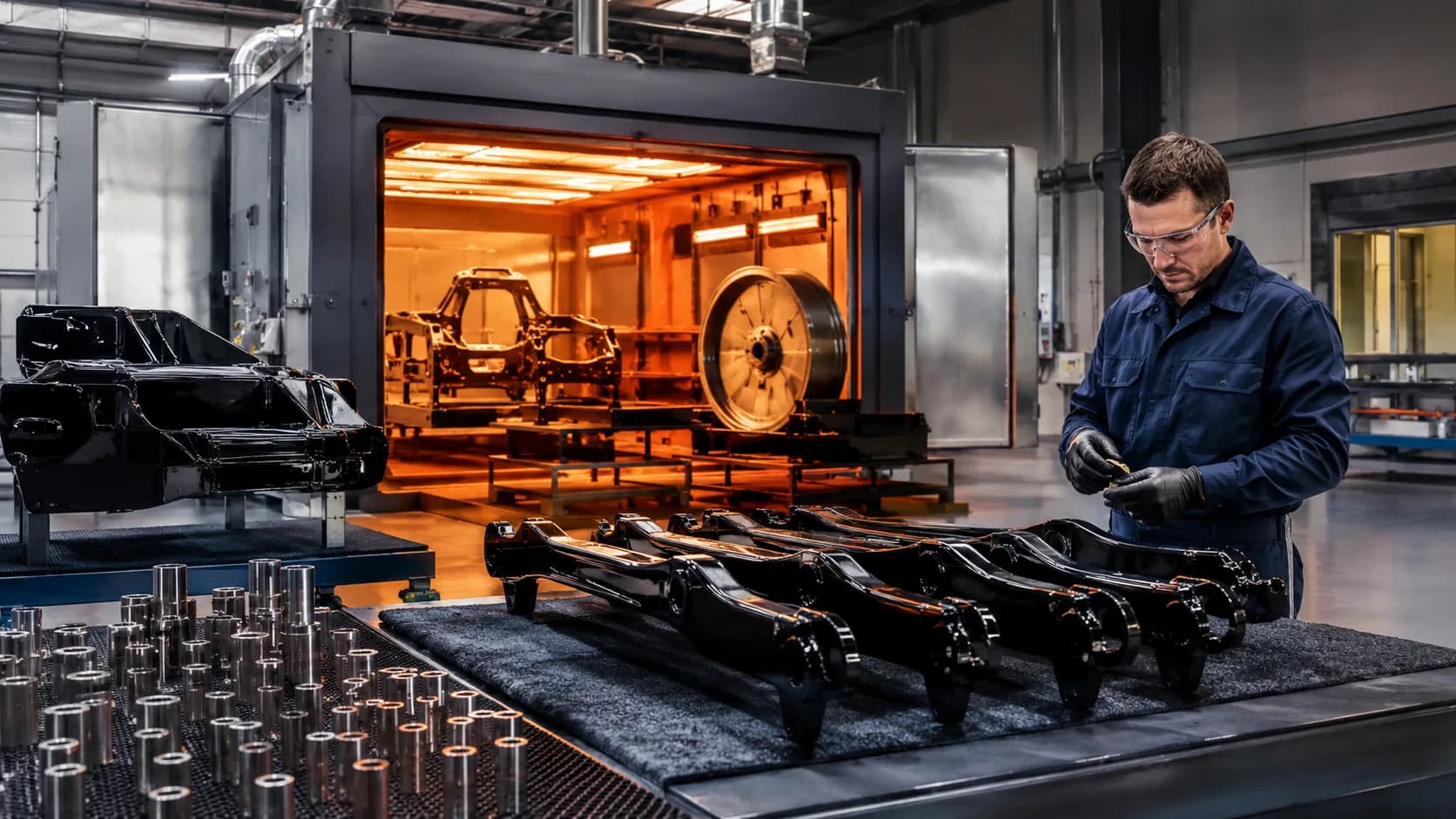
- 5Cure — the system is cured to the schedule for that fluoropolymer
- 6QA and pack — film build and finish are checked and documented before the parts are packed for return freight
The recoat is applied to the original specification unless the operating conditions have changed — where they have, we will recommend a different system. For the umbrella service and system range see Teflon coating services, and for thick-film chemical barrier work see Halar (ECTFE) coating.
What AST recoats
AST is supplier-neutral. We recoat bakeware and bakery equipment from all major OEMs — including pan and tray sets originally supplied by American Pan, KAAK, KEMPF and SASA — alongside food processing, chemical process and general industrial equipment from any manufacturer.
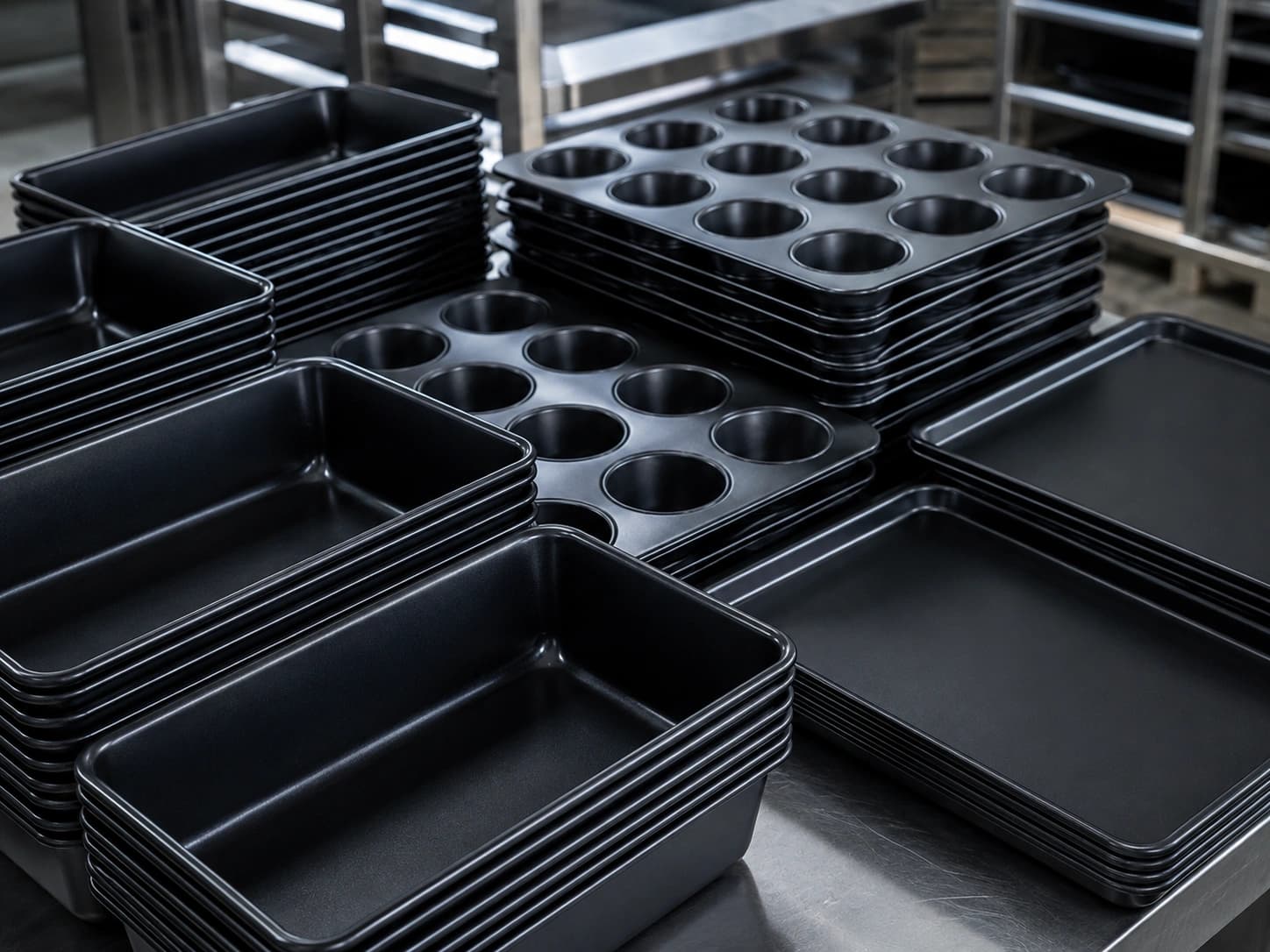
Bakeware & bakery equipment
- Bread pans, pan sets and lids
- Bun, muffin and flat trays
- Baking moulds and formers
- Dough handling and moulder components
Food processing equipment
- Hoppers and chutes
- Rollers and transfer hardware
- Cutters and dividers
- Guides and conveying surfaces
Chemical process equipment
- Halar (ECTFE) lined vessels and pipework
- Tefzel (ETFE) lined spools and valves
- Fittings and fabricated assemblies
- Pump and agitator components
General industrial
- Rollers and rotating equipment
- Guides, ramps and slides
- Moulds and release surfaces
- Jigs, fixtures and tooling
Recoat or replace?
When release performance drops or a barrier lining reaches the end of its service life, the part itself is usually still sound. The substrate is intact; only the coating has worn. Recoating restores full non-stick or barrier performance at a fraction of the cost of a new part, and keeps proven equipment — pan sets, moulds and fixtures that already run correctly on your line — in service rather than replacing it.
On bakeware the economics are straightforward: AST PTFE and PFA systems typically deliver 3,500–6,000 bake cycles per recoat, and pan sets are normally cycled back through recoating repeatedly across their service life. For a fuller treatment of what drives coating service life, read how long does Teflon coating last and our guide to Teflon coating for bakeware.
Condition assessment on receipt
Every part is inspected when it arrives and the substrate condition is confirmed before processing begins. Not everything sent for recoating should be recoated — where the substrate itself is damaged, distorted or corroded, we would rather tell you up-front than coat a part that will not perform. Where a set comes in mixed, we report back on what is worth recoating and what is not.
Turnaround and freight
Coating turnaround at our Campbellfield, Melbourne facility is typically 7–10 working days from receipt of parts. We coordinate freight in and out across Australia and New Zealand, so equipment can be sent from any site without local handling arrangements.
For customers running continuous production, recoating is normally scheduled as a rolling program — sets are batched and rotated through so lines keep running while a portion of the equipment is off-site. Talk to us about batch sizes and scheduling and we will build the cycle around your production plan.
AST is the only licensed industrial fluoropolymer applicator in Australia, New Zealand and South East Asia, with technical and quality audits by Chemours Global. Recoated work is applied to the same specification and QA as new work, and carries the same lifetime warranty on workmanship.
Related pages
Teflon Coating Services
The full Chemours PTFE and PFA service range.
Halar (ECTFE) Coating
Thick-film chemical barrier linings and re-linings.
How Long Does Teflon Coating Last?
What drives coating service life, and when to recoat.
Teflon Coating for Bakeware
Bakeware coating systems and bake-cycle performance.
Strip, re-prepare, recoat, return
Worn equipment comes in, is taken back to bare prepared metal, recoated to specification and returned to production — typically inside 7–10 working days from receipt.
Frequently Asked Questions
Can Teflon coating be reapplied?
How many bake cycles does a bakeware recoat last?
Do you recoat equipment from any manufacturer?
What is the turnaround on a recoating job?
Is a recoated part as good as new?
Only licensed industrial fluoropolymer applicator in Australia, New Zealand and South East Asia
Yearly technical and quality audits by Chemours Global
Lifetime warranty on workmanship
Need worn equipment recoated?
Send us photos or a drawing, the coating system currently on the part and how it is used. Our team will confirm what is worth recoating and prepare a technical quotation.