












Metal Spray Coating Services
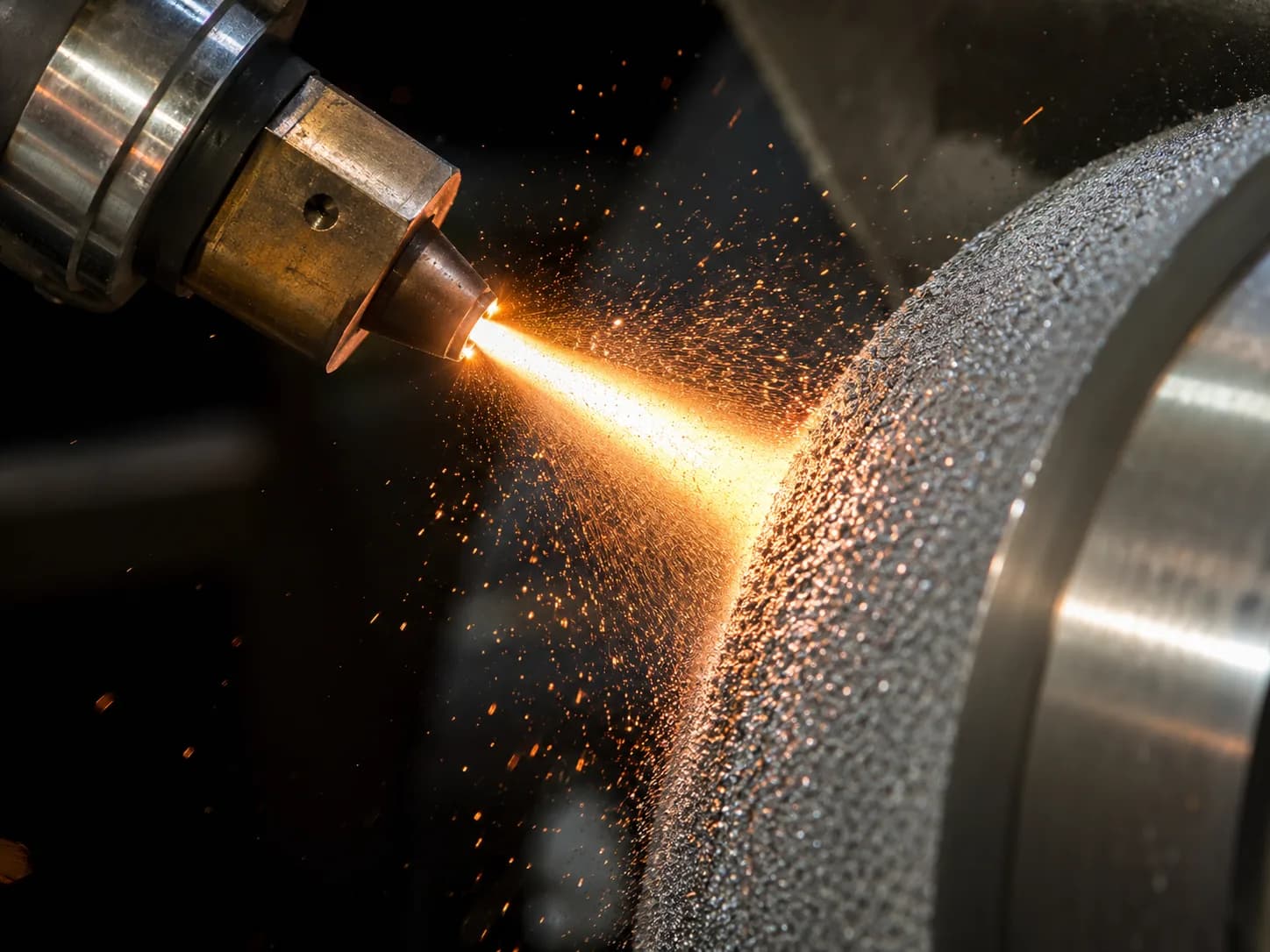
AST provides wire arc spray metal coating services using chrome, stainless steel and nickel wire. The twin wire arc spray process builds dense, wear-resistant metal coatings on industrial components for dimensional restoration, corrosion protection, hard chrome replacement and surface engineering.
Wire arc spray is an environmentally safer alternative to hard chrome plating — no hexavalent chromium, no hazardous plating baths.
Wire arc spray is a thermal spray process — distinct from AST's fluoropolymer and graphite-resin coating services. Where fluoropolymers provide non-stick, chemical resistance and barrier protection, metal spray coatings provide hardness, wear resistance, corrosion protection and the ability to restore worn components to original dimensions. AST offers three primary wire materials, each selected to match the service environment.
Chrome Wire Spray
Hard chrome replacement coating achieving hardness comparable to electroplated chrome. Can be ground and polished to mirror finish for hydraulic rods, cylinder bores and sealing surfaces. Eliminates the environmental hazards of hexavalent chromium plating baths while matching or exceeding plated chrome performance. No micro-cracking — unlike electroplated chrome which develops fine crack networks that create corrosion pathways.
- Hard chrome plating replacement
- Hydraulic rods and cylinder bores
- Sealing and bearing surfaces
- Ground and polished to mirror finish
Stainless Steel Wire Spray
304 and 316 grade stainless steel coatings for corrosion resistance, dimensional restoration and general engineering rebuild. 316 stainless provides excellent chloride and marine resistance. Good machinability after spraying, making it suitable for precision components that need to be returned to OEM specifications.
- Corrosion resistance (marine, chemical, atmospheric)
- Food-grade and dairy equipment
- Pump shafts, impellers and sleeves
- General engineering dimensional restoration
Nickel Wire Spray
Pure nickel and nickel-chromium alloy coatings for high-temperature service, caustic and marine environments, and bond coat applications. Excellent corrosion resistance in seawater, alkali and chemical process environments. Used where operating temperatures or chemical exposure exceed the capability of stainless steel coatings.
- High-temperature oxidation resistance
- Caustic and marine corrosion protection
- Boiler tubes and heat exchangers
- Bond coats for multi-layer systems
Why Choose AST for Metal Spray?
AST combines wire arc spray metal coating with fluoropolymer and graphite-resin coating under one roof. This means customers dealing with complex surface engineering problems have access to multiple coating technologies from a single applicator — rather than coordinating between separate specialists for different surface treatments.
- Chrome, stainless steel and nickel wire spray
- Combined with fluoropolymer and Resigraph capability
- Machining and grinding to finished dimensions
- Lifetime workmanship warranty
AST provides wire arc spray metal coating from our Melbourne facility, servicing customers across Australia. Combined with our fluoropolymer and Resigraph capabilities, AST offers a broader surface treatment service than single-technology applicators — backed by a lifetime warranty on workmanship.
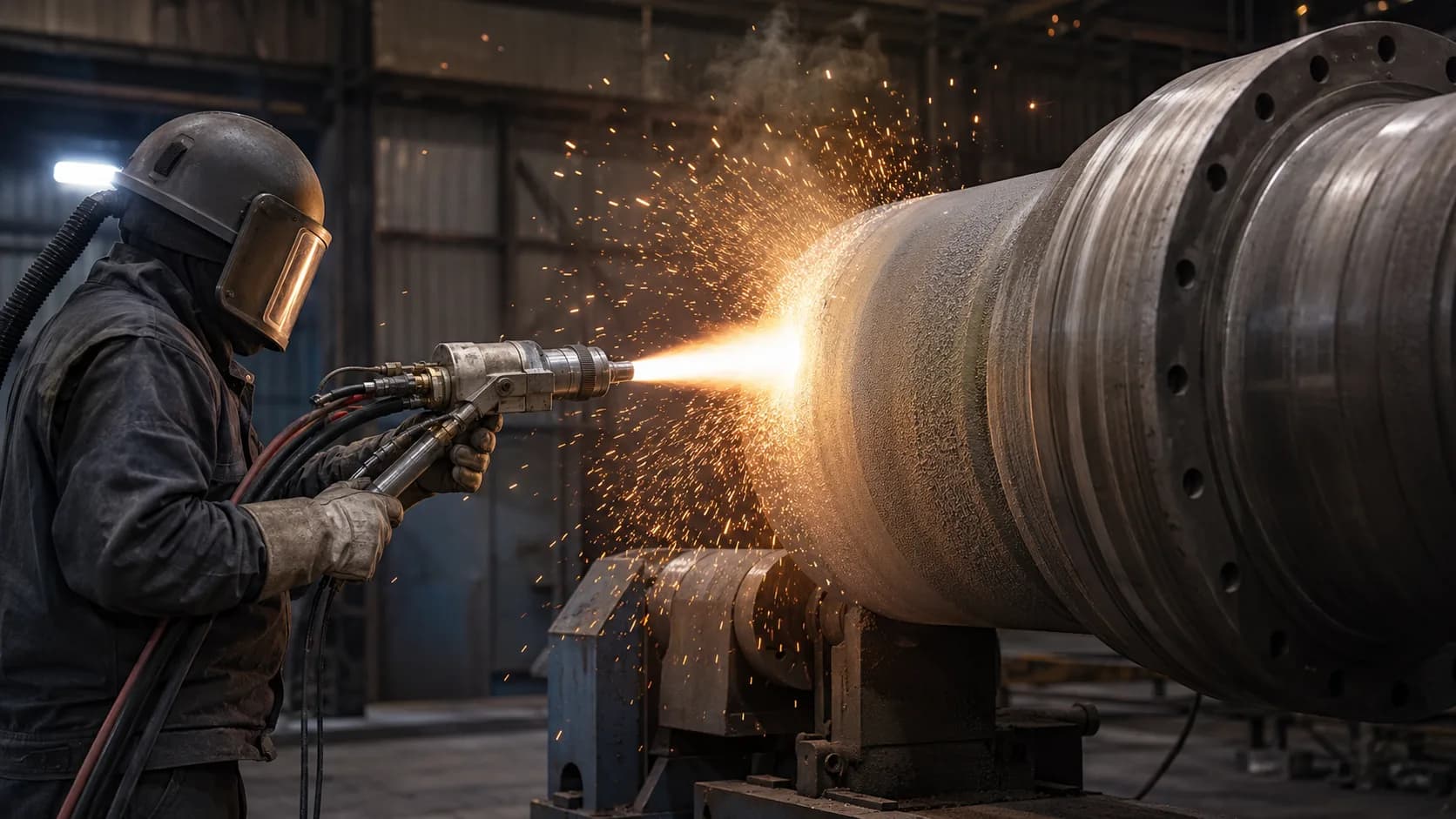
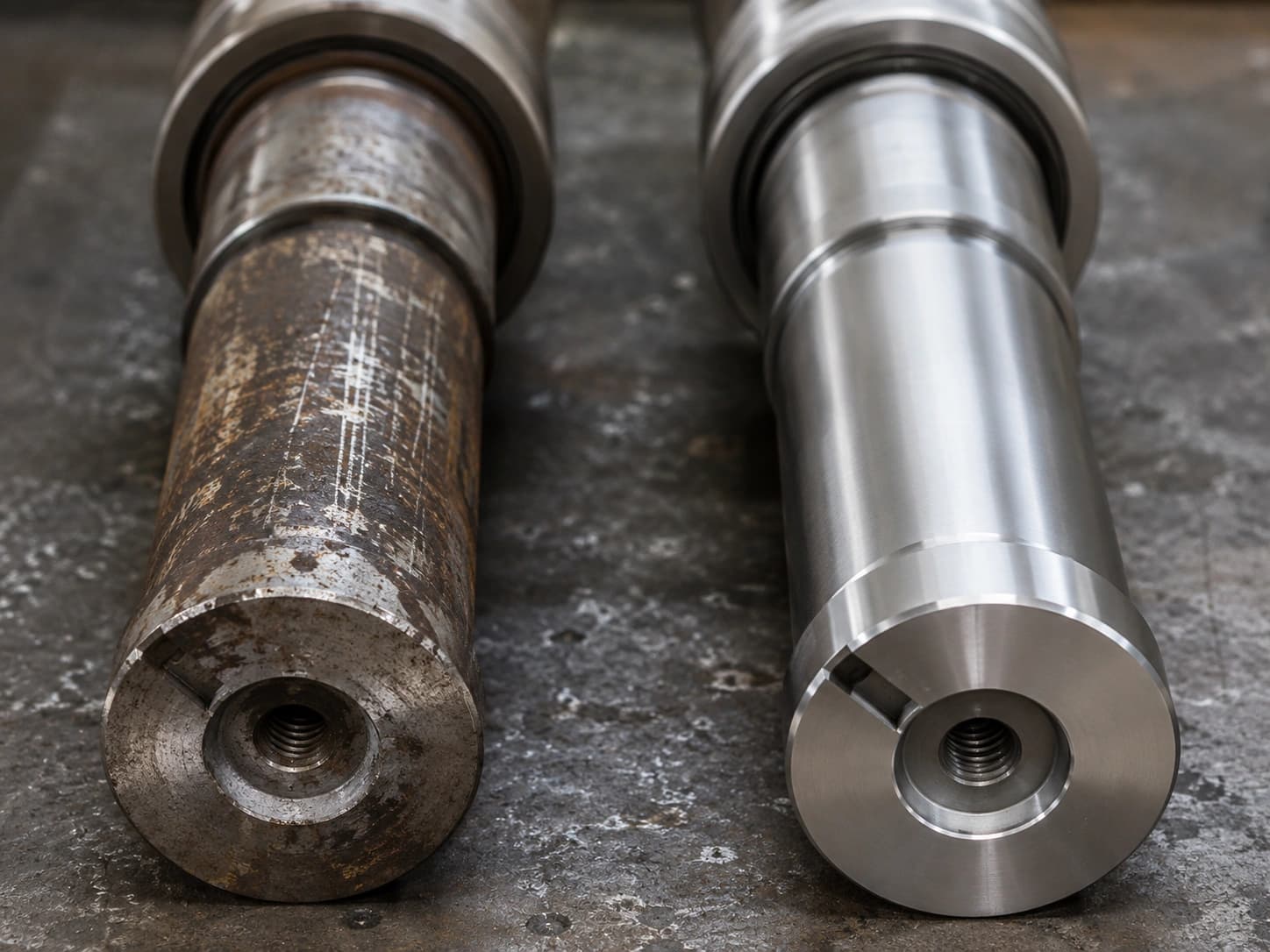
Wire arc spray in the workshop
Chrome, stainless and nickel wire arc spray — building back shafts, journals and rolls to OEM dimensions, then machined or ground to finished tolerance.
Frequently Asked Questions
How does wire arc spray work?
What is the bond strength of wire arc spray coatings?
Can wire arc spray coatings be machined after application?
Is wire arc spray environmentally safer than hard chrome plating?
What surface preparation is required for wire arc spray?
Only licensed industrial fluoropolymer applicator in Australia, New Zealand and South East Asia
Yearly technical and quality audits by Chemours Global
Lifetime warranty on workmanship
Need metal spray coating for your components?
Talk to AST about your dimensional restoration, wear protection or hard chrome replacement requirements. Our team can review your application and prepare a technical quotation.