














Coating Stripping & Burn-Off Heat Cleaning
AST strips old coatings in our burn-off ovens, then grit blasts the part back to bare metal. Send us parts for strip-only work, or for a full strip and recoat.
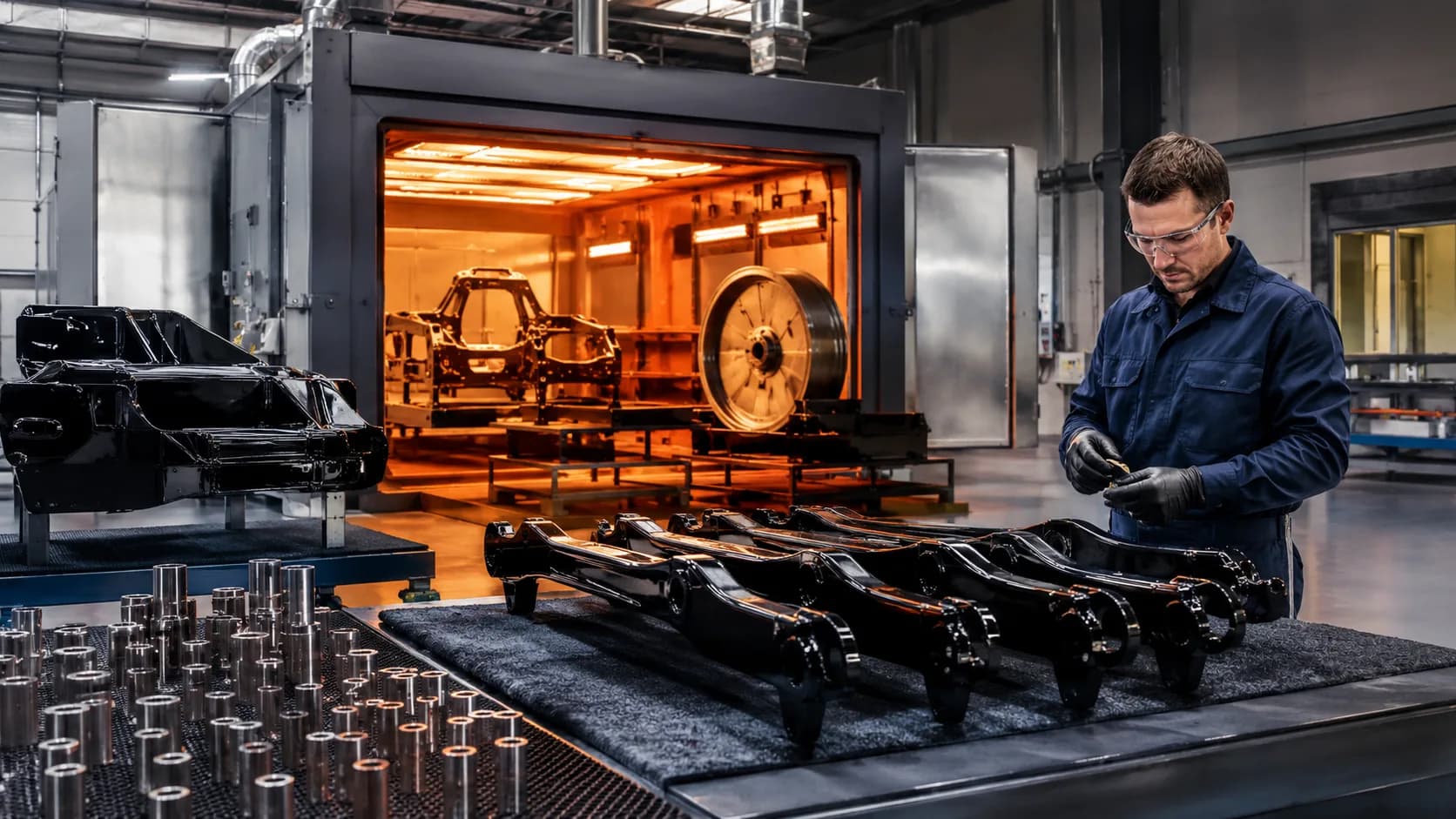
Melbourne-based, serving all of Australia and New Zealand, with ovens that take parts up to 7 m long, or 8 m loaded diagonally.
Short answer: Burn-off heat cleaning puts a coated part in an oven at several hundred degrees. The heat breaks down paint, powder coat, nylon and fluoropolymer coatings, carbon and oil, and a grit blast takes the part back to bare metal. AST offers it as a strip-only service (heat clean, or heat clean and blast) and as the first step of every recoat. It suits steel, cast iron, stainless and machined parts. Aluminium needs a lower setting and, for thin parts, a trial first.
What burn-off heat cleaning is and what it removes
Burn-off is also called heat cleaning or pyrolysis. The part sits in a burn-off oven on a temperature profile set for the metal, so the base material is not harmed. The heat chars the old coating. A grit blast then removes what is left, along with any oxidised layer, and leaves a clean, keyed surface.
- Paint and powder coat
- Old nylon coatings, including Rilsan
- Old fluoropolymer coatings, including worn Teflon™ and other non-stick coatings
- Baked-on carbon from bakeware and food equipment
- Oil and contaminants in the metal, on new parts as well as old
- Thick chemical linings such as Halar, broken up with plastic-media blast and then abrasive blasted
Not sure what is on your part? Send us a photo or a sample before you freight it, and we will tell you whether burn-off will take it off.
AST stripping at a glance
| Method | Burn-off (heat clean) in our burn-off ovens, then grit blast to bare metal |
| Service options | Heat clean only; heat clean and blast; or strip and recoat |
| Removes | Paint, powder coat, nylon (Rilsan), fluoropolymer and non-stick coatings, baked-on carbon and oil |
| Thick linings | Broken up with plastic-media blast, then abrasive blast to bare metal |
| Suits | Carbon and mild steel, cast iron, machined parts, castings, stainless and aluminised steel |
| Aluminium | Low-temperature burn-off; trial piece first on thin or perforated parts |
| Largest part | Ovens 7 m × 3 m × 3 m; up to 8 m loaded diagonally |
| Turnaround | Strip-only: ask us. Strip and recoat: typically 7–10 working days |
Why burn-off, not chemical stripping or blasting alone
| Method | How AST uses it |
|---|---|
| Burn-off, then blast | Our main method. Heat chars the coating; the blast takes the part to bare metal. |
| Chemical strip tanks | We do not run a chemical strip line. Heat and blast do the job instead. |
| Blasting alone | Used for thick linings and for parts that cannot be heated. Some parts must not be blasted, so mark them. |
On a fluoropolymer coating, blasting alone has to cut through a tough film. Burn-off chars it first, so the blast only cleans and keys the metal.
Strip-only work, or strip and recoat
Strip-only
Heat clean only, or heat clean and blast. We strip steel parts such as ute trays, security doors and bull bars, and return them clean for your own finishing. Blasting and fabrication shops use this service too.
Strip and recoat
Every recoat starts with a full strip to bare metal. We never patch or coat over a cured coating. New parts get the same burn-off and blast. See Teflon™ recoating, cookware recoating and Teflon™ coating services. Parts going for metal spray are heat cleaned first too.
Coating work carries our lifetime workmanship warranty.
Parts that suit burn-off
Carbon and mild steel
Frames, trays, guards and fabrications. Burn-off and grit blast is our standard route.
Cast iron and machined parts
Solid parts take burn-off and blast well. Mark any faces that must not be blasted.
Castings
Burn-off also drives gas out of the metal. Expect some outgassing from porous castings.
Stainless steel
Stripped in the burn-off oven with good airflow around each part.
Aluminised steel bakeware
Burn-off and a light blast. Each blast thins the aluminised layer, so pans have a limited number of recoats.
Aluminium
Low-temperature burn-off and a light blast. Thin or perforated parts need a trial first.
What burn-off does not suit
- Thin or perforated aluminium without a trial piece. These can distort or melt in the oven.
- Parts with plastic, rubber, seals or wiring still fitted. Burn-off destroys them, so remove them first.
- Decals, labels and nameplate infill. Heat removes them.
- Sealed or hollow parts with no vent. Trapped air expands in the oven, so the part needs an opening.
- Silicone-rubber coated trays. These contaminate the oven load, so we decline them.
- Parts that cannot be heated at all. For these, blasting is the only route. Tell us before we start.
For thin or perforated aluminium, we run a low-temperature burn-off trial on one piece first. Before the full job, you confirm in writing that you accept the risk of losing some parts. Long flat parts and thin plate get a lower setting and weighted ends to limit warping.
How AST strips a part
- 1
Receive and inspect
We check the part, note any damage and photograph it on receipt.
- 2
Set the burn-off
We pick the oven setting for the metal: standard for steel, lower for aluminium and temper-sensitive parts. The setting is recorded on the job.
- 3
Burn off
The part runs through the burn-off oven. The old coating, carbon and oil char.
- 4
Grit blast
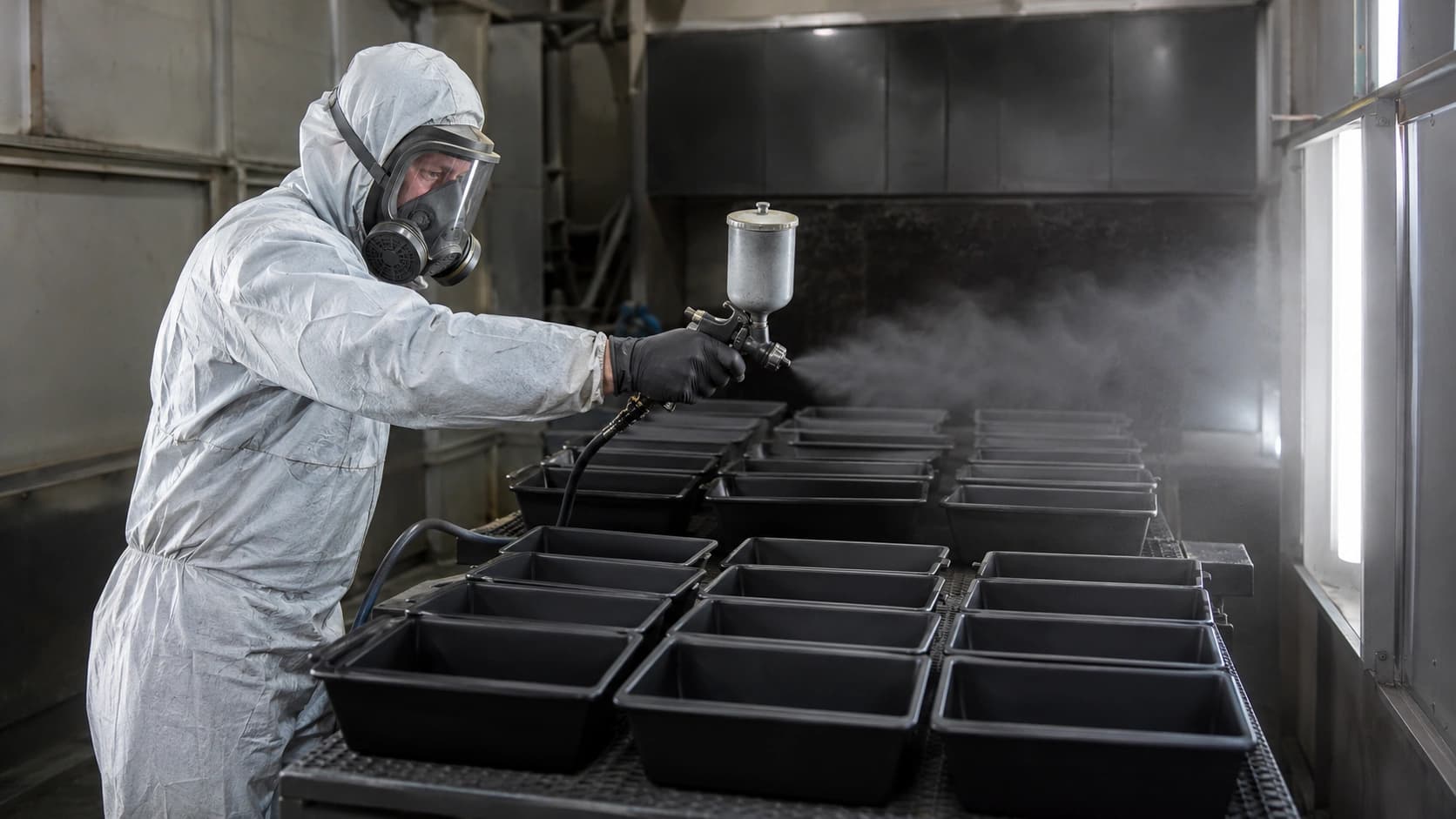
A blast takes the part back to bare metal and keys the surface. Faces marked "do not blast" are protected.
- 5
Check and report
We inspect the bare metal. If stripping shows holes, rust or splits, we tell you before anything else happens.
- 6
Return or recoat
Strip-only parts are packed for return. Recoat parts go straight on to coating.
Before you send a part: a quick check
- Size: does it fit within 7 m × 3 m × 3 m? Longer parts up to 8 m can load diagonally. Send dimensions first for very large parts.
- Metal: tell us if it is aluminium, stainless, cast or heat-treated, so we set the oven to suit.
- Fittings: remove plastic, rubber, seals, wiring and anything else that cannot take the heat.
- Sealed cavities: closed tubes and welded-shut sections need a vent hole, or trapped air expands in the oven.
- No-blast areas: mark threads, bores and faces that must not be blasted.
- Oil: tell us about heavy oil or food residue. It can stain the metal after heat cleaning.
- Outcome: say whether you want the part back stripped, or stripped and recoated.
AST is the only Chemours-licensed industrial fluoropolymer applicator in Australia, New Zealand and South East Asia, with technical and quality audits by Chemours Global. We run two burn-off ovens and our own blast rooms in Melbourne, so stripping and recoating happen under one roof.
Frequently Asked Questions
What is burn-off heat cleaning?
Can you strip a part without recoating it?
What coatings can burn-off remove?
Will burn-off damage my part?
Can you strip aluminium?
Why burn off a new part before coating it?
Can you just add a fresh coat over the old one?
What if stripping shows damage?
How long does stripping take?
Only Chemours-licensed industrial fluoropolymer applicator in Australia, New Zealand and South East Asia
Yearly technical and quality audits by Chemours Global
Lifetime warranty on workmanship
Need a coating stripped back to bare metal?
Send us photos, the metal and the part size, and tell us whether you want it stripped only or stripped and recoated. We will quote it.