



















Short answer: Recoating a bakery pan means stripping the worn non-stick coating back to bare metal and applying a new Teflon™ coating. It typically costs about a third of the price of a new pan or set, because most of a pan's cost is the steel and the steel lasts for decades. Recoat when release starts to fail but the pans are still straight and sound; replace them when the steel itself is worn through, warped or damaged.
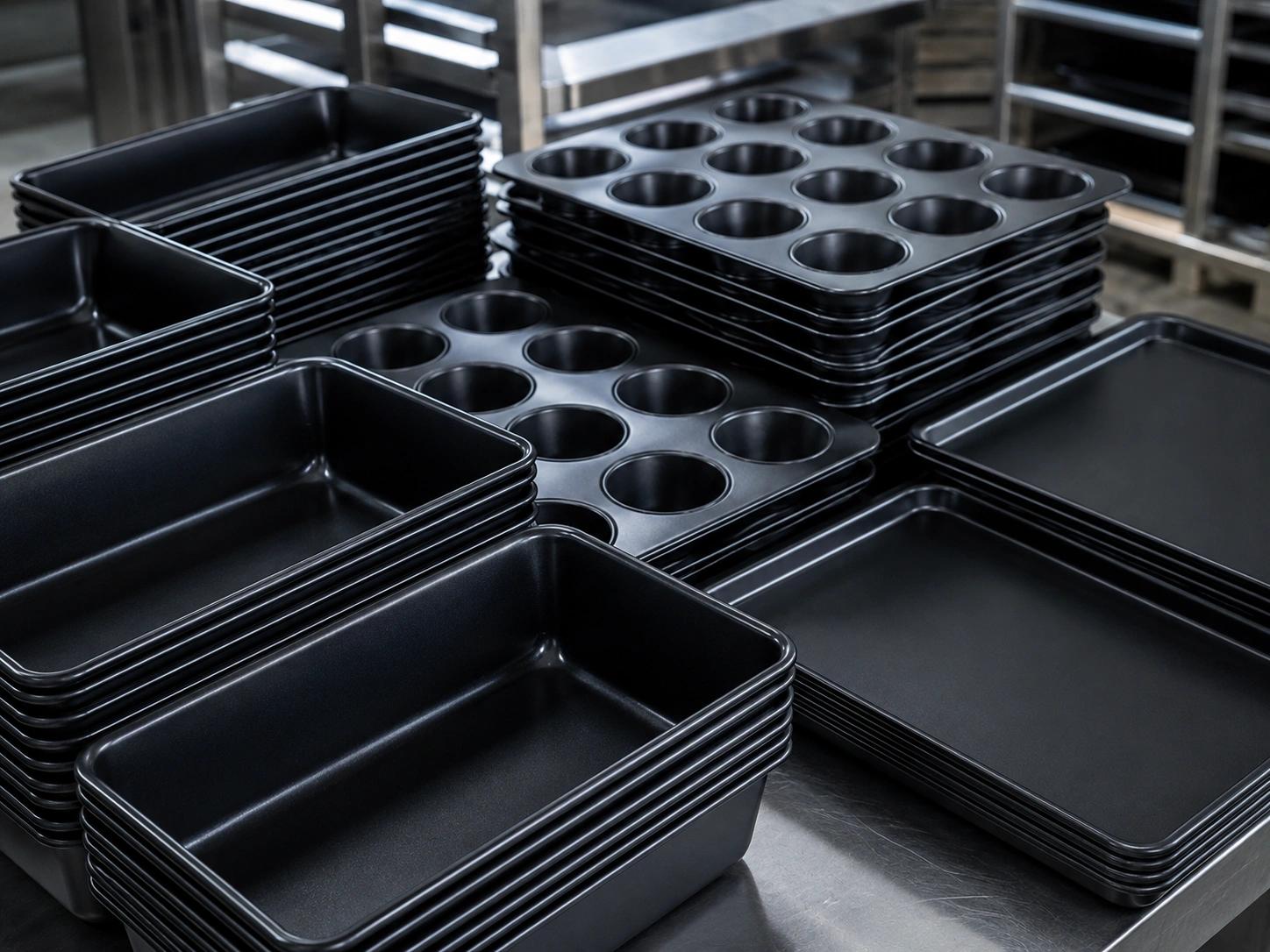
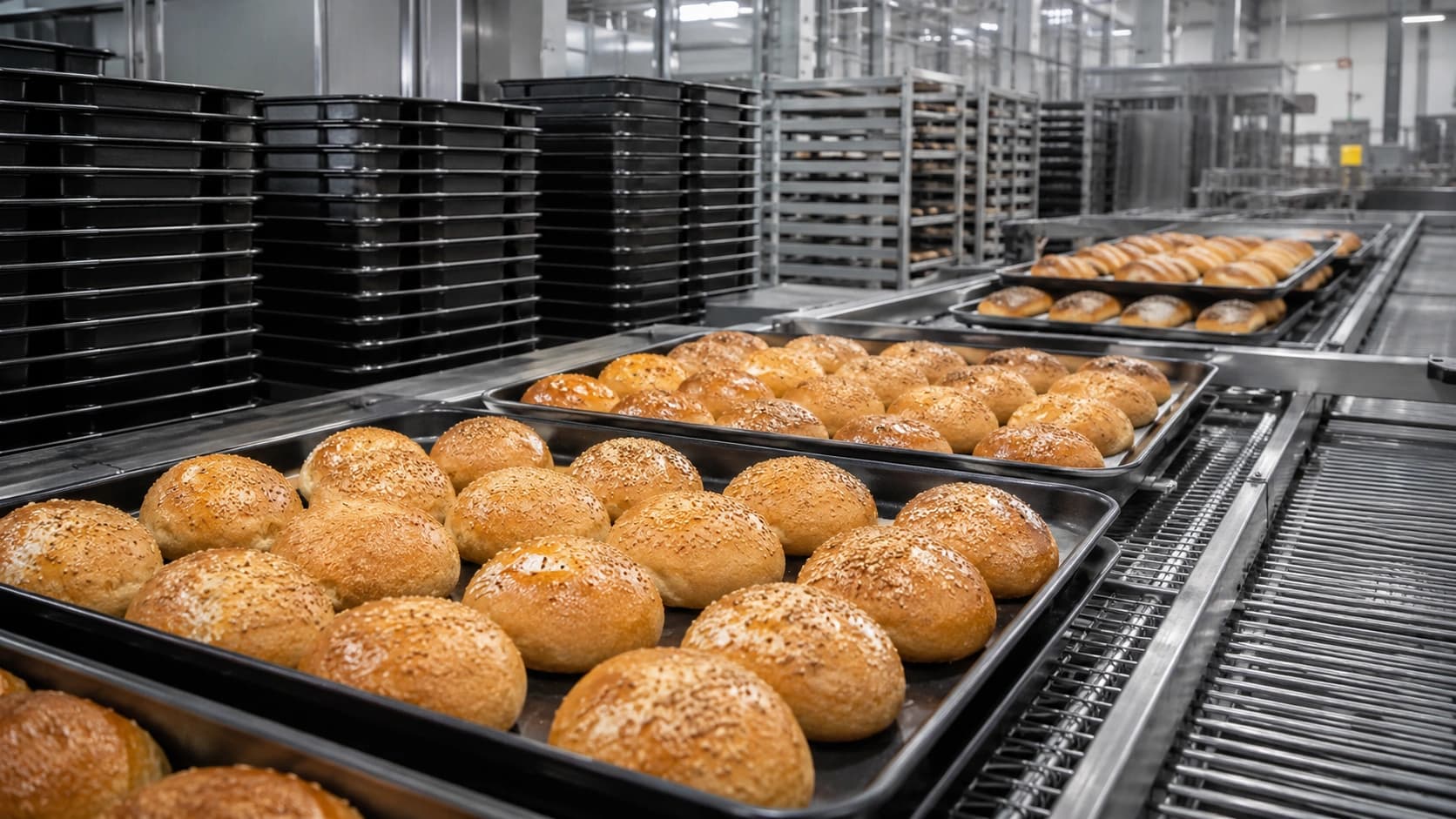
Plant bakeries run thousands of bread pans, bun trays and baking trays, and the coating is the part that wears out first. This guide covers what recoating involves, what it costs against buying new, the signs that a set is due, and when recoating is the wrong call.
What does recoating cost compared with new pans?
Typical guide. The price per set depends on pan type, size, quantity and coating.
The saving comes from keeping the steel: a pan's body, straps and lids are where most of the material and tooling cost sits, and they outlast many coatings. You also keep the pans your ovens, proofers and depanners are already set up for, so there is no new tooling, no line trials and no wait for new manufacture. We quote per set from a few photos and a count.
Signs a set is due for recoating
Product sticks or tears
Loaves and buns no longer drop cleanly on depanning.
More release oil
The line needs extra oil to run, which costs money and builds carbon.
Worn, patchy coating
Dull patches, and bare metal showing at corners and edges.
Slower cleaning
Carbon builds up faster and pans take longer to clean.
When recoating is the wrong call
- The steel is worn thin or through, often where pans ride on conveyors.
- Pans are warped or badly dented, so they no longer sit or release evenly.
- Straps, welds or lids are broken and the set needs structural repair first.
We never coat over the old coating: every recoat is stripped back to bare metal first, so the new coating bonds to clean metal.
How recoating works
Inspect and count
We check each set for dents, warping and worn-through steel, and agree which sets are worth recoating.
Strip by burn-off
The old coating and baked-on carbon are burnt off. No effect on steel; aluminium and thin stainless are assessed first.
Blast the surface
Abrasive blasting gives bare metal a clean, even profile so the new coating bonds properly.
Spray and cure
Chemours Teflon™ primer and topcoat are sprayed, then cured in our ovens at the temperature the system needs.
Inspect and pack
Every set is checked for coverage and finish. Strapped sets are recoated as complete assemblies.
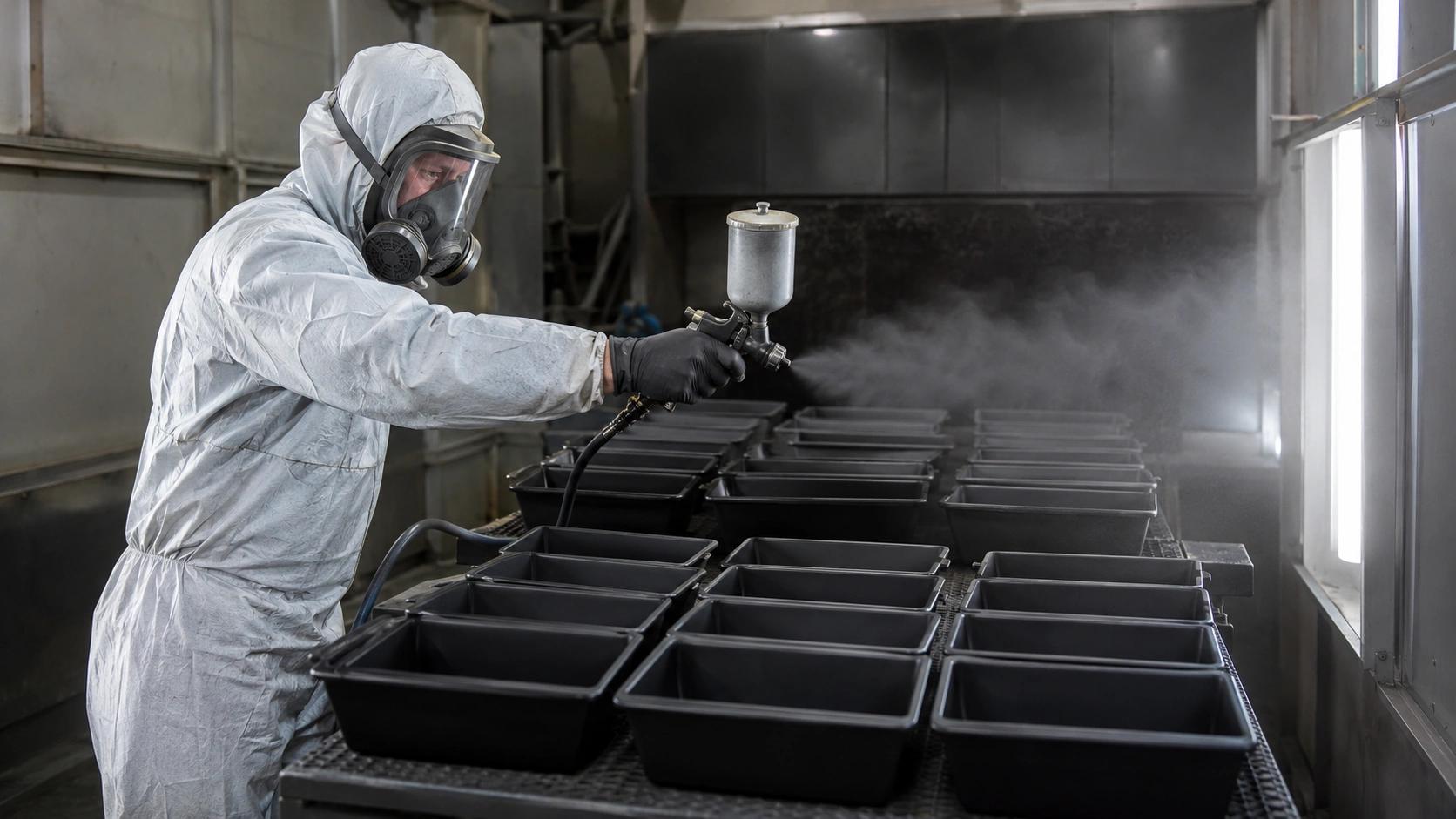
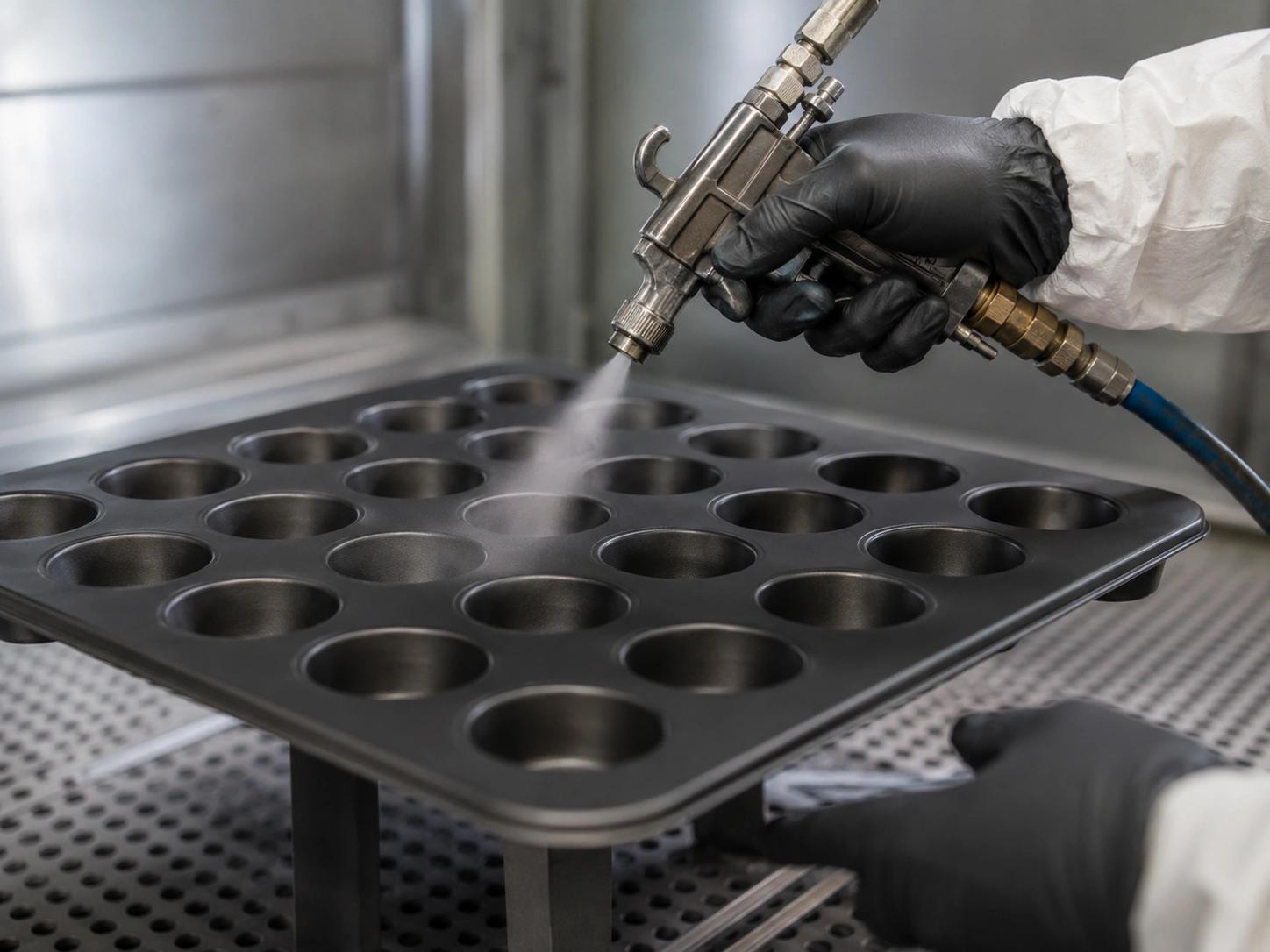
Turnaround at our plant is typically 7–10 working days from receipt, and the plant handles around 600 to 700 units a week. Every recoat carries a lifetime workmanship warranty.
PTFE or PFA?
Bread pans and deep moulds
Typical release life: about 3,500 releases on deep pans, about 5,000 on shallow trays
Some flat trays and lids
Typical release life: about 1,500 releases
PFA is our standard for bread pans and gives the longest release life between recoats. Real life depends on the product, bake temperature, release agent and handling, so these are typical expectations, not guarantees. Both are FDA-compliant for food contact (21 CFR 175.300) and made without PFOA. More in PTFE vs PFA and how long Teflon coating lasts.
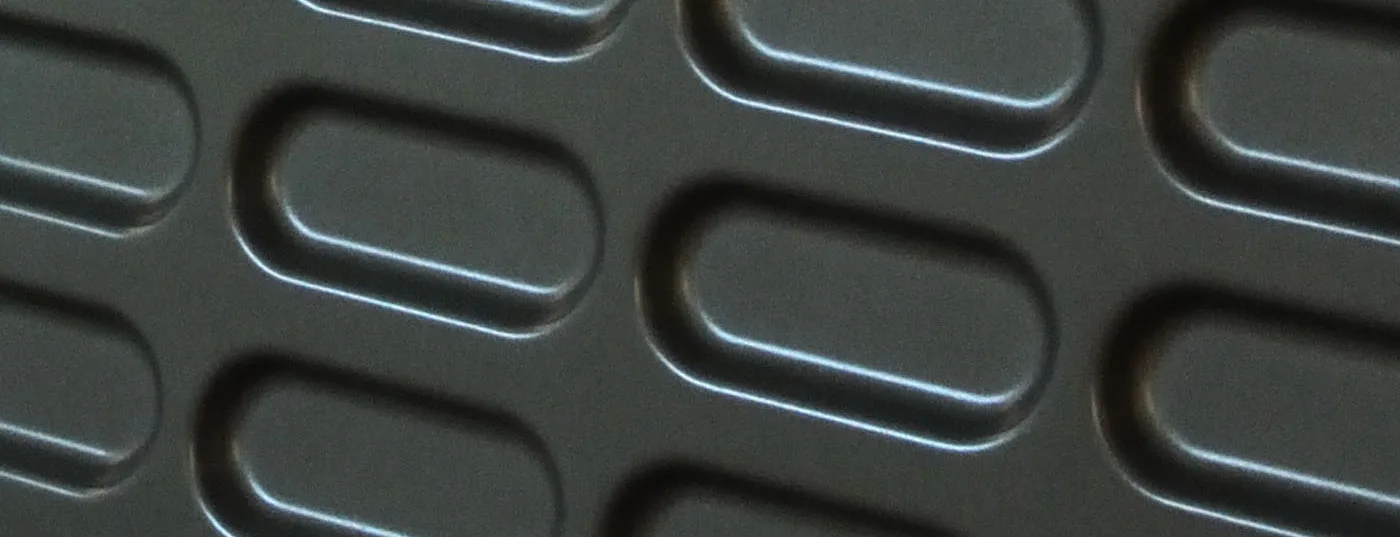
Which pans can be recoated?
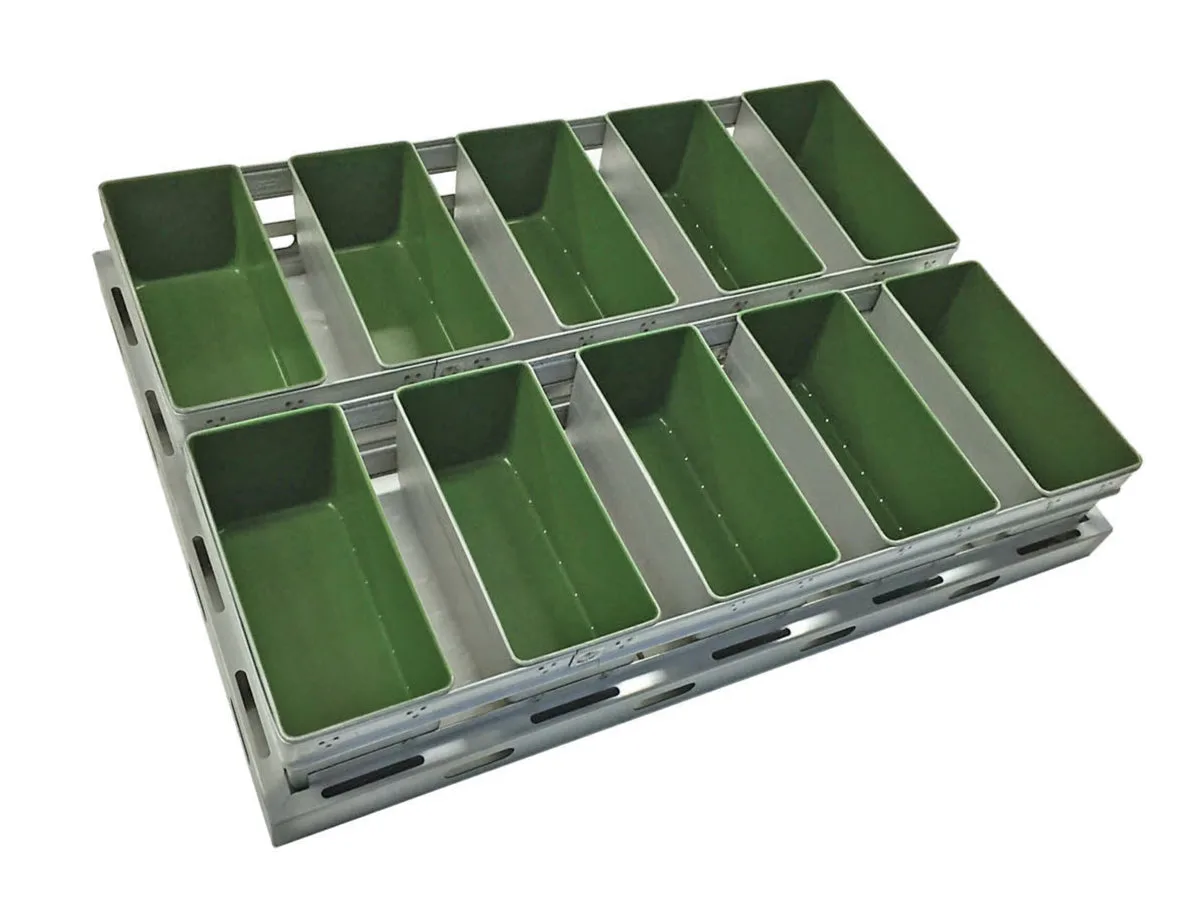
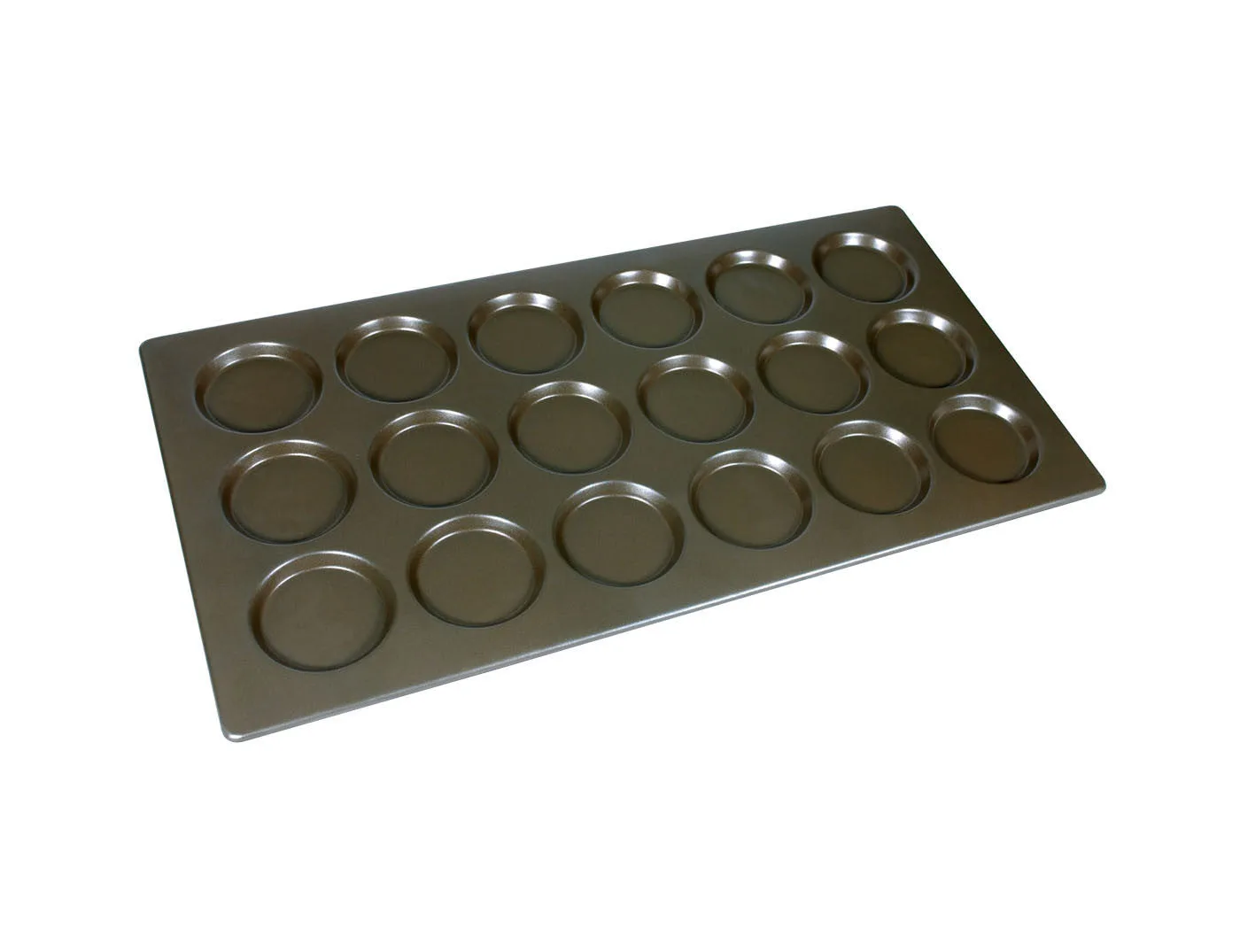
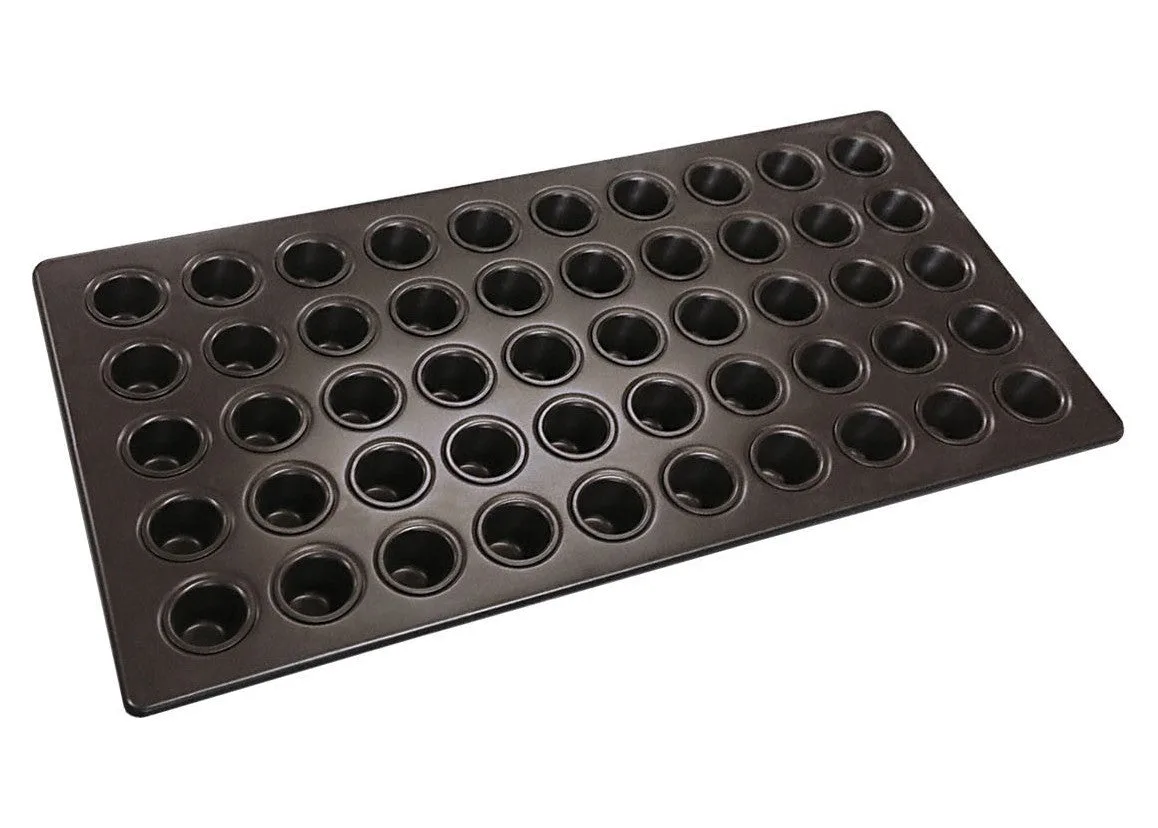
We regularly recoat bakeware made by American Pan (APC), Kempf, KAAK, SASA and others.
Getting started
Send a few photos, the pan type and size, and how many sets you have. A small trial lot is a good way to see the result on your own line before sending a full batch. Bakeries outside Australia ship pans to us by sea; see bakery pan recoating for Asia and the Middle East. For Australian bakeries, see Teflon recoating services or request a quote.