



















Short answer: Teflon™ is Chemours' brand for pure fluoropolymer coatings such as PTFE and PFA, sintered into a film that releases food and resists chemicals. Xylan® is PPG's family of composite dry films: a fluoropolymer lubricant held in a resin binder, with molybdenum disulphide in the bearing grades. Choose Teflon for non-stick release and chemical resistance. Choose Xylan for dry lubrication and wear on loaded parts such as bearings, slides and fasteners.
The two names get used as if they were the same thing, because both contain PTFE and both feel slippery. They are built for different jobs. AST applies both, so this guide sets out where each one belongs.
What Teflon is
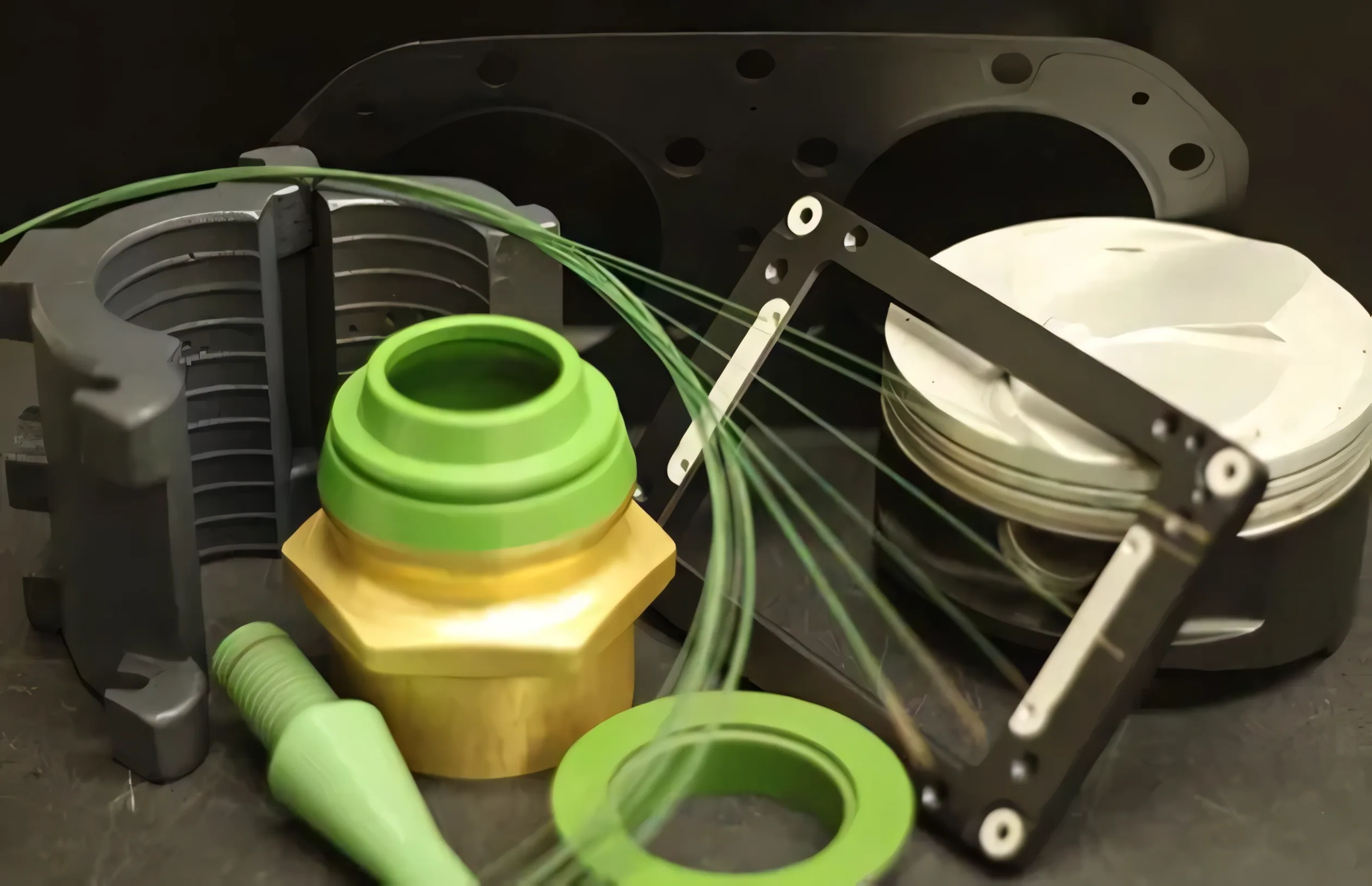
Teflon™ is the Chemours trademark for a family of fluoropolymers: PTFE, PFA, FEP and ETFE. As a coating, the fluoropolymer is sprayed onto a prepared surface and baked at high temperature, about 400 °C for PTFE, until it fuses into a continuous film. The result is a surface almost nothing sticks to, that resists most chemicals and holds up to 260 °C in service. That is why Teflon is used on bakeware, food-processing equipment, chutes, hoppers and chemical-process parts.
AST is the only licensed Chemours™ industrial applicator in Australia and New Zealand. See Teflon coating services.
What Xylan is
Xylan® coatings are made by PPG, which acquired Whitford. A Xylan coating is a composite: fluoropolymer particles dispersed in a resin binder, and in bearing grades a solid lubricant such as molybdenum disulphide (MoS₂). The binder gives a harder, more wear-resistant film than pure PTFE. Xylan 1052, for example, cures to a pencil hardness of 2H–4H.
Xylan is a family rather than one product. Bearing grades such as Xylan 1052 are built to carry load, and some cure at much lower temperatures than Teflon: 1052 cures in 10 minutes at 232 °C. That suits titanium and many aluminium tempers. Release grades such as Xylan 8870 and 8840 are used on food moulds and dairy equipment. Other grades are made for fasteners.
Side by side
| Teflon™ (PTFE/PFA) | Xylan® | |
|---|---|---|
| What it is | Pure fluoropolymer film (PTFE, PFA, FEP or ETFE) | Composite: fluoropolymer lubricant in a resin binder, some grades with MoS₂ |
| Made by | Chemours (Teflon™ is a Chemours trademark) | PPG, formerly Whitford (Xylan® is a PPG trademark) |
| Main job | Non-stick release, chemical resistance, food contact | Dry lubrication and wear on loaded parts; release; fastener coating |
| Typical film | PTFE about 20–35 µm in total | Xylan 1052 15–25 µm; Xylan 8870 two coats of 12.5–17.5 µm |
| Cure (metal temp) | PTFE about 400 °C | Xylan 1052 10 min at 232 °C; Xylan 8870 360–400 °C |
| Use temperature | PTFE up to 260 °C | Xylan 1052 260 °C continuous; Xylan 8870 204 °C continuous |
| Load bearing | Low: soft film, made for release | Xylan 1052 rated to 150,000 psi (about 1 GPa) contact pressure |
Figures are from the manufacturers' data sheets for the grades named. Other grades differ.
When to choose Teflon
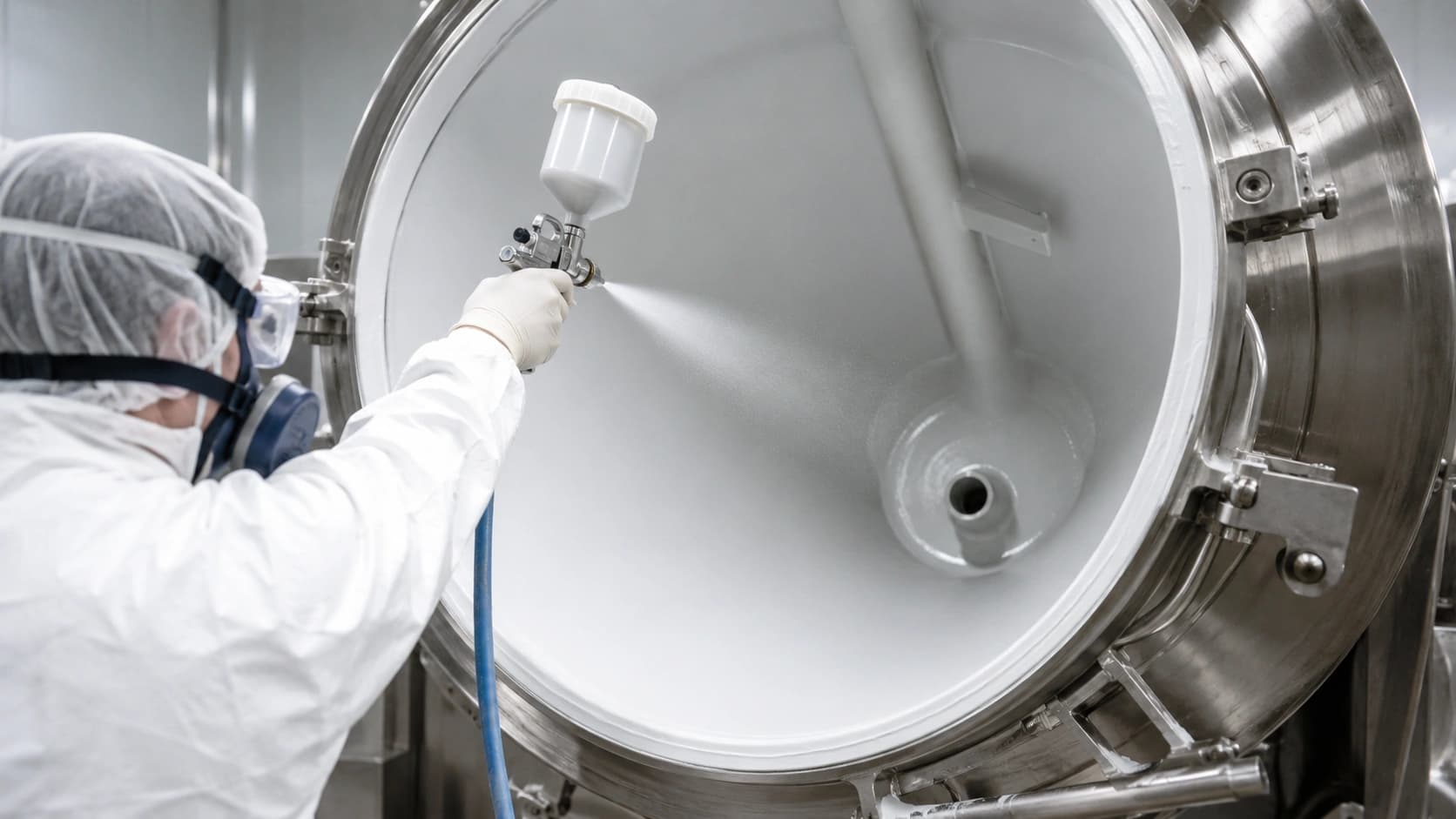
- Bakeware, moulds and food-contact surfaces that need the best release.
- Chemical resistance, including hot or aggressive process media.
- Service temperatures up to 260 °C.
- Parts that can take a high-temperature cure.
When to choose Xylan
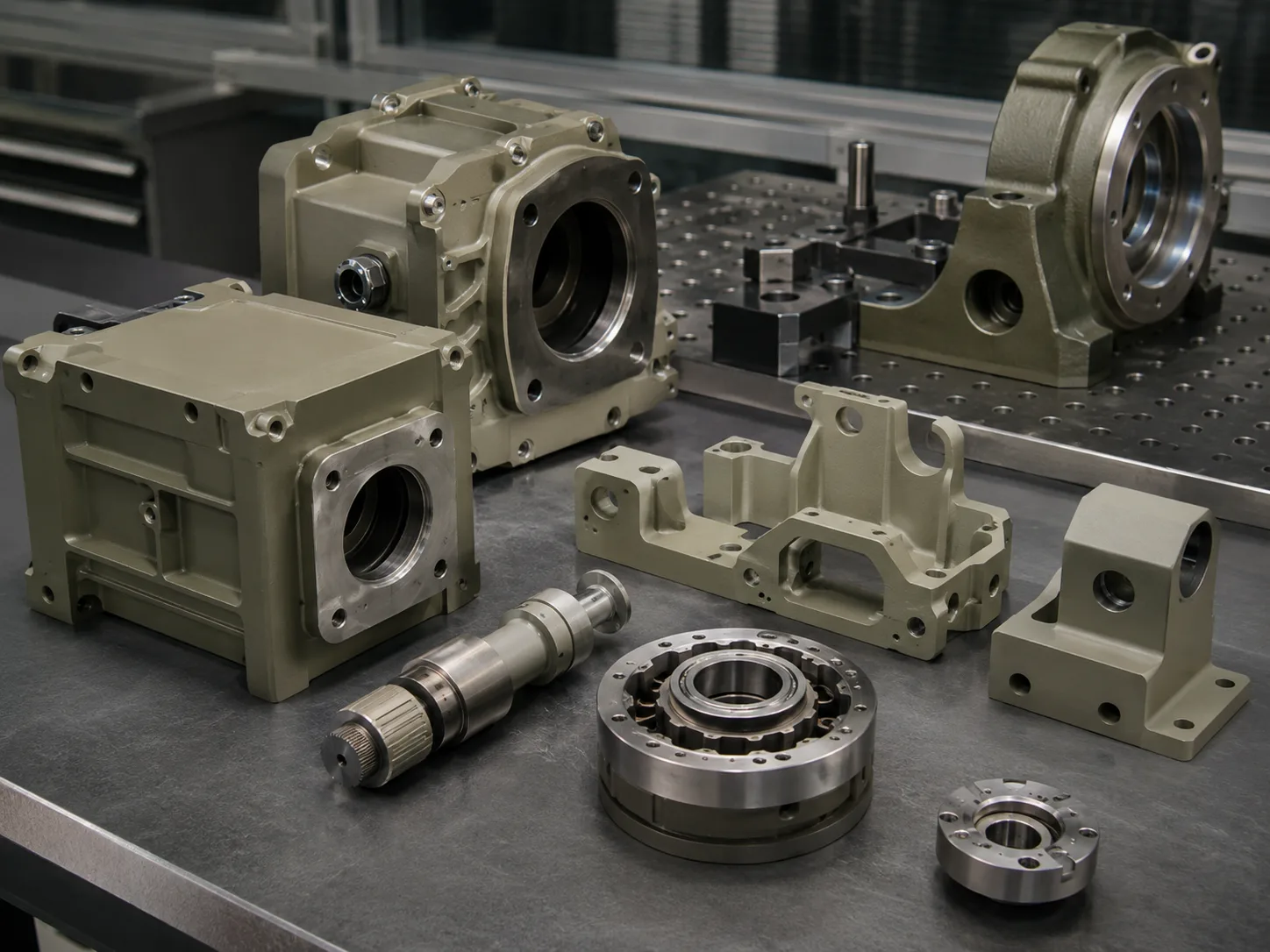
- Bearings, thrust washers, slides and pivots that must run dry under load.
- Aerospace and precision parts where the film must stay thin to keep clearances.
- Titanium and temper-sensitive aluminium, with a low-cure grade such as 1052.
- Threaded fasteners that need controlled torque and corrosion protection.
Food contact
Chemours Teflon™ systems used by AST are FDA-compliant for food contact (21 CFR 175.300). Among Xylan grades, 8870 “Thyme Green” and 8840 Off White are used for food and dairy release. Bearing grades such as 1052 are not offered for food contact. Grade selection matters, so tell us if the part touches food. More in Is Xylan a PFAS? Xylan and food safety.
Not sure which?
Tell us what the part does, its alloy and temper, the load or contact pressure and the operating temperature. We will recommend Teflon or a Xylan grade and quote it. See Xylan coating services or request a quote.